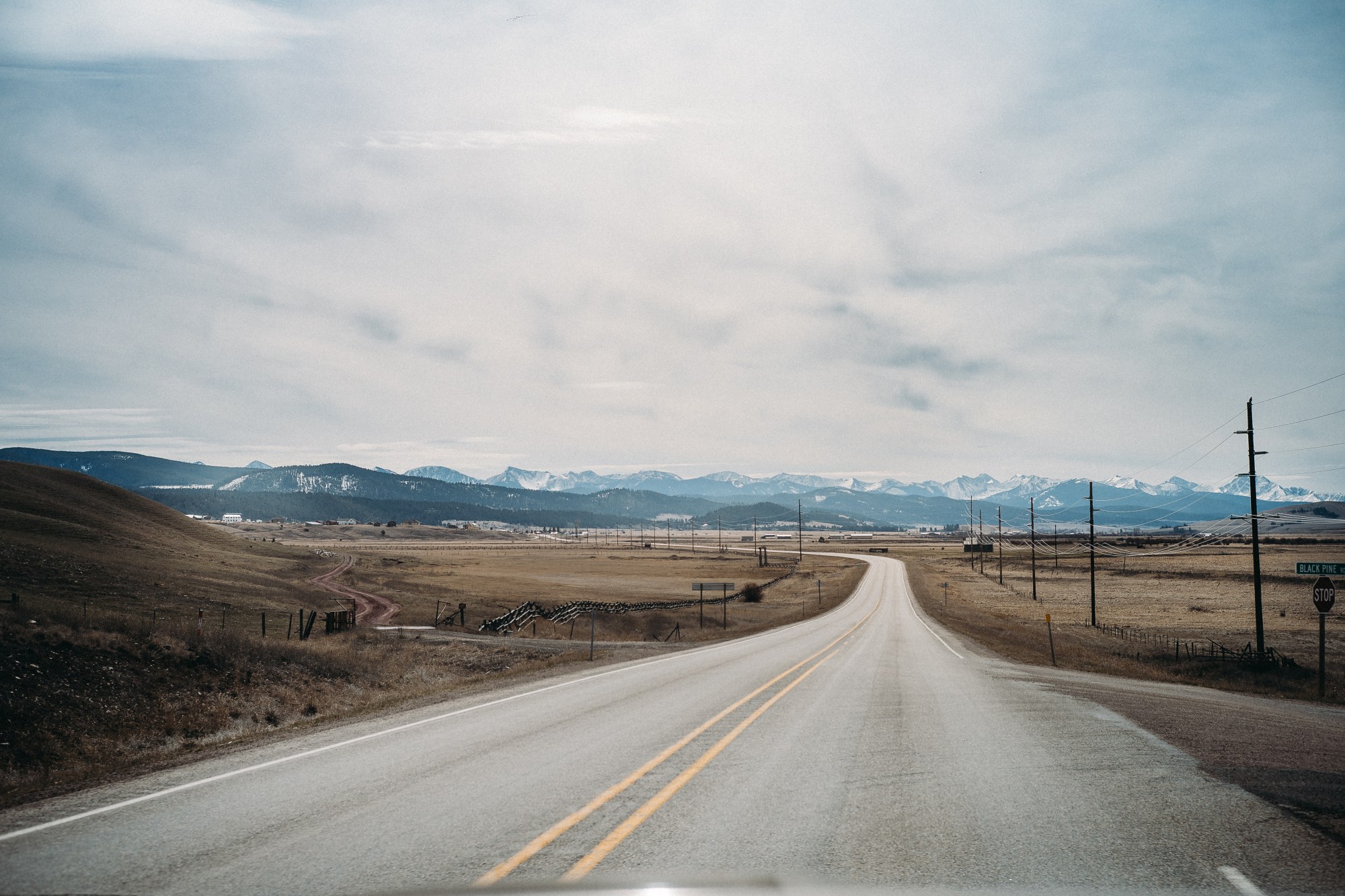
When you peel away from the interstate onto the back route toward Philipsburg, Montana, two things announce themselves at once: the openness and the hush. The hush is visual as well as audible—a vast prairie sky that seems to swallow the land. The two-lane road winds slowly through the wide fields, mostly filled with hay, cows, and a handful of scattered ranches, while in the distance the granite ridges that once housed numerous mines stand now as quiet, untamed wilderness.
Alongside the highway, an abandoned rail line runs in perfect alignment, its surface weary from years of neglect and overtaken by stubborn grasses.
“You might come here Sunday on a whim,” the American writer Richard Hugo opened his poem “Degrees of Gray in Philipsburg,” and that line still suits the quiet here, a memory of a era when a Sunday drive could exist simply to glimpse the countryside just beyond your own street. (For my part, I’m making the trip on a Monday, and it remains very quiet.)
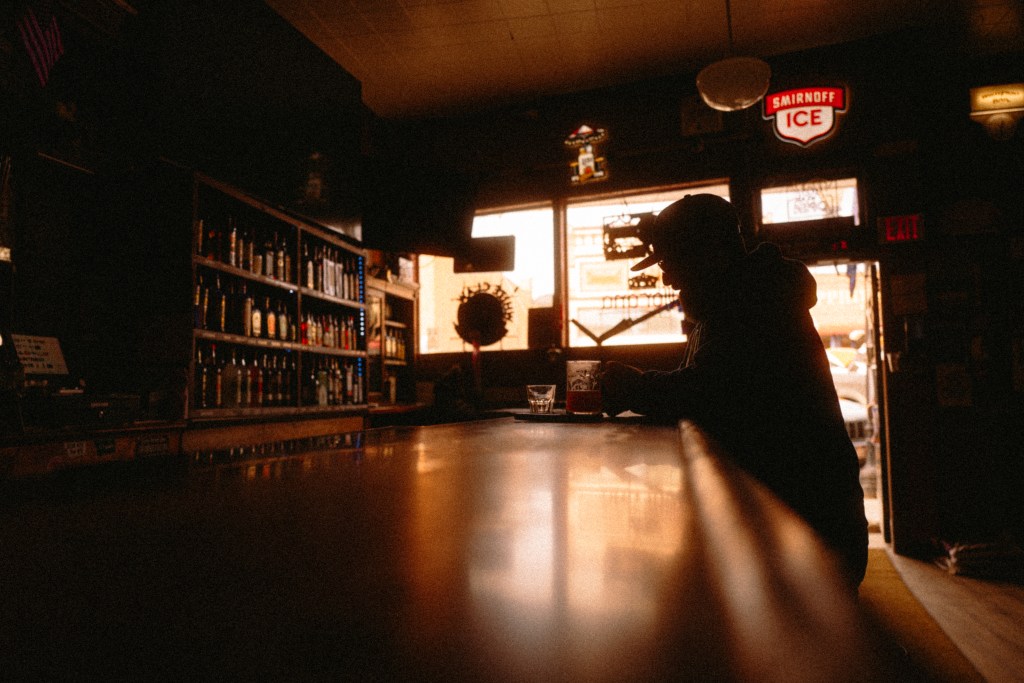
When Hugo penned that poem in 1973, he likely rolled in from Missoula, as I did. He was known to undertake excursions like this just for the sake of it, to find a quiet bar where no one knew his name and where he could speak with the bartender without any sense that he was a poet of note. In 1973 Philipsburg wore a melt of gray, as Western Montana faced a shrinking population, an faltering economy, weaker employment, and a loss of color in its poetry. It was a wavering, obscure place whose status as a mining and ranching stronghold was waning rapidly.
The region is vast and open in the valleys, yet cradled by immense mountains. Butte, by local measure, is Philipsburg’s neighbor, though it sits well over an hour away by car. Butte was once an epicenter that sent life rippling through the area. In the late 1800s copper, gold, and silver drew thousands here, making Butte the wealthiest city west of the Mississippi. While the most extensive mining operations went directly beneath Butte, many other mines dotted this western Montana landscape as well.
Philipsburg sits in a secluded mountain valley, acting as a hub linking several more remote mining communities where ores were gathered before being hauled via the main line to the smelter at Anaconda. In the early 1900s Philipsburg counted about 1,600 residents, nearly double what it hosts today, while other towns farther into the high country once housed even more people. Granite, now entirely abandoned, was once a place where more than 3,000 people lived in the late 1800s. The whole area buzzed with money and activity.
You might come here Sunday on a whim.Say your life broke down. The last good kissyou had was years ago.
Richard Hugo, 1973
As miners tunneled deeper into the rock, loggers worked just as hard, cutting timber not only to build the rail lines but to support the tunnels that stretched underground and to feed the furnaces that processed the ore after it surfaced. The broad grass-filled valleys hosted herds of cattle, as they do today, sustaining local populations all the way to Butte and beyond.
Life in these mountains unfolds at a geological pace, and the people who call this place home live and die within that cadence. The rhythm of rural living differs from what urban dwellers are used to, and the slow unraveling of the small towns—what looked like death to outsiders—happened in its own time, almost geologic in character.
In the late 19th century the United States sought to balance its books while pushing growth, and it devised a mandate to purchase gold and silver. As the federal government bought silver—an ore these mountains know well—the valley’s life blossomed. Then came the repeal of the Sherman Silver Purchase Act, triggering an abrupt collapse of the silver industry. Some mines closed overnight, but many clung to a stubborn life, attempting to preserve a way of living that felt remote. Towns in the mountain’s farthest reaches dimmed first, and gradually remaining populations moved to more accessible valleys.
Philipsburg endured, yet through the course of the 20th century it slipped into decline. The streets grew rougher, shops gradually dried up, and next door Granite faded into a bare patch of high-country land. Towns die, and Philipsburg watched with a front-row seat to the process.
That slide toward loss hit a nadir on a Sunday in 1973 when Hugo wandered into the local bar on a whim. The town had been built on handsome structures, a “dance floor set on springs,” as Hugo described, yet the industry above it—ore mills that had once lent the town wealth—was dismantled and left as abandoned scrap, bricks and metal torn apart as if by a cartoonish storm. Philipsburg was left with two tall towers watching over the decline, waiting for a day they too might fall.
But when I visit, roughly a century after the town’s peak and about half a century after Hugo’s lines first echoed here, I find something different and newly alive. As I leave the highway and turn onto Philipsburg’s gently curving, ascending street, I notice signs of vitality.
New structures, fresh timber on hillside homes, a new metal industrial building, and bright paint on the storefronts downtown. The mailman’s dog rides shotgun beside him as he waves I pass. The town is quiet, yet it feels inhabited. Not gray shadows but parcels of color. I stop for a coffee at a shop that doubles as a fly-fishing store, a cafe, run by newcomers who moved here within the last year, drawn by the unhurried tempo, a city-free worry, and the chance to know neighbors again. Though several buildings sit empty, locals tend them, hoping for new business, and there’s a new specialty food shop downtown opened by another newcomer from the East who sees this place as a chance to discover something that many in America assume is lost. He notes that there is less to do, and that lack is the appeal.
A town that seemed to be dying is waking up. Everyone I speak with—at the coffee shop, the old bar, the specialty shop, the jewelry store, and the brewery—urges: visit The Candy Shop.
The Candy Shop is actually The Sweet Palace, on Broadway, a two-story building with a whimsically painted façade. Step through the glass doors and you’re stepping back in time: long glass cases and wooden displays spanning the length of the space, baskets full of candy, and tin shingles lining the ceiling. Built by a family who wanted not only to keep this town alive but to make it special, to make it a place where families would want to bring their children and raise them. In short, a simple candy shop has played a pivotal role in bending Philipsburg’s arc from faded gray to brighter colors.
People here say the future will be defined by technology. Large cities will be its guardians. Yet as we watch technology unfold, there’s a persistent unhappiness, a sense that the life we’re told is inevitable isn’t making us any happier.
Meanwhile, these small towns might offer a remedy. They provide neighbors who not only chat but will lend a hand in a pinch. They host a small brewery where you can meet the owner in the afternoon sun, surrounded by locals who invite you to join their table for a beer. I was invited to such a table during my Philipsburg visit. For a moment I felt like a guest; soon we discussed every topic—from fishing to backroads, the area’s growth, and a silver nugget I’d found in a nearby creek years ago with my kids while fishing. The talk quickly shifted to the logistics of moving to a town like this. A few newer residents said they wished they had moved sooner.
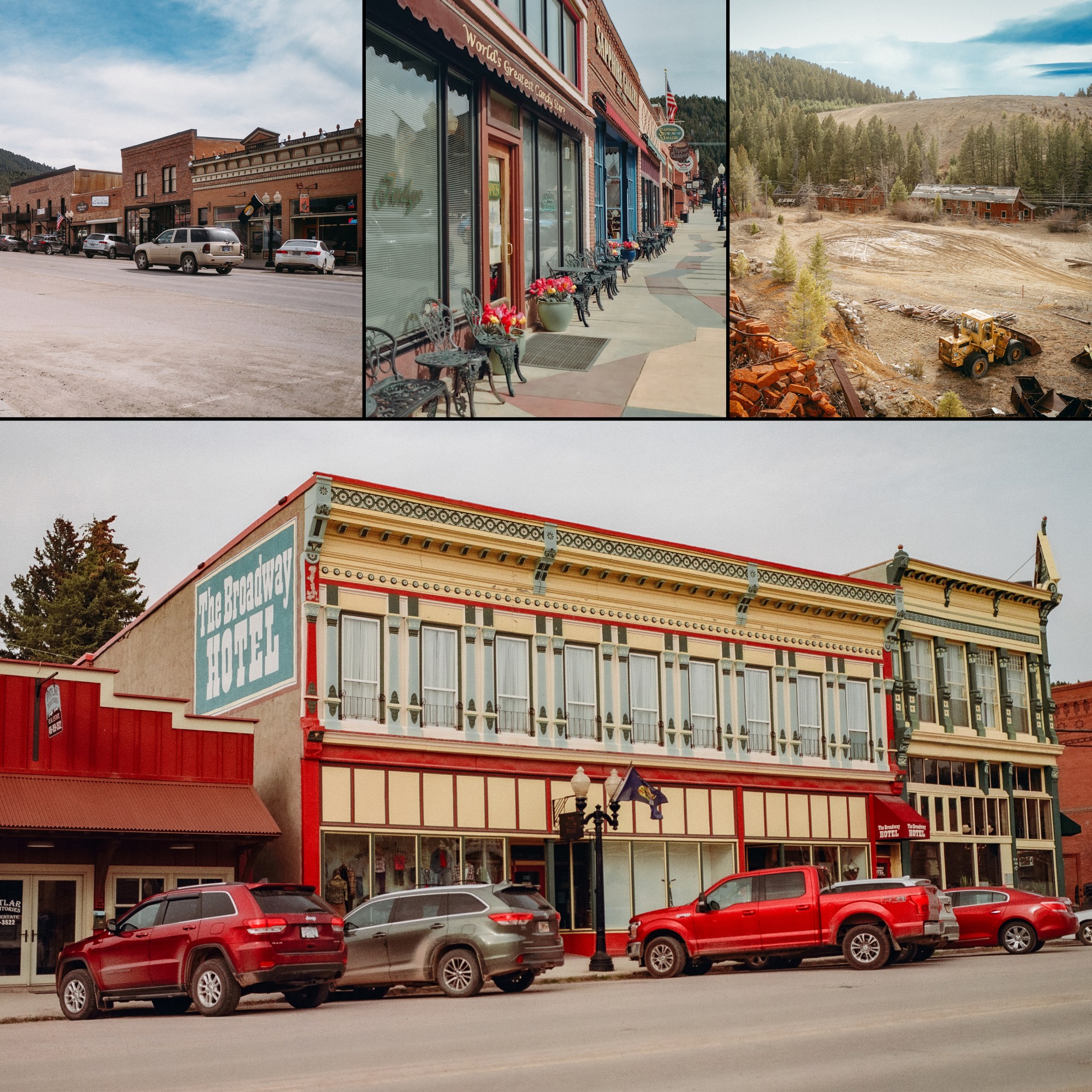
It doesn’t take long to stroll this small town. A few quiet streets, a handful of downtown blocks, and in that brief window I meet a dozen or so people. Several tell me, after a visit to The Sweet Palace, to go up and see the old mill above the town. It isn’t hard to find: the two tall towers rise from the hill above the trees, a sentinel over the town. As my truck climbs the road, I imagine Philipsburg in the 1800s when travel was by horse, on foot, or by mule. Everything moved more slowly. And there were thousands more people here then.
At the old mill site I gain a clearer sense of the massive infrastructure that once stood here. I meet a man who is clearing out what looks like an old settling pond. I ask if I may photograph the place, and he not only agrees but offers a quick history of the ghost mill perched on the mountainside above us.
When I mention Richard Hugo, he smiles and says that everyone in Philipsburg knows that poem. And though it paints the town as a dying place when Hugo wrote it, it remains a point of pride. I ask if he thinks the poem still accurately describes Philipsburg. He shakes his head with kindness: No, it was accurate then. It felt like decay. Yet change, for a small town like this, moves slowly. It requires people who can see what makes it special. Philipsburg is rekindling. His family plans to reopen this mine site later this year. He is out there working to prepare it. It will not be a colossal operation, but it will sustain a handful of families. And with those families come children, and with children, a gradual strengthening of the town’s lifeblood.
I ask if I can reach the old Granite mine, where the ghost town remains. He studies my truck, especially the tires, then nods—“Yes, you can get up there.”
He offers directions and urges me to photograph the route along the way. I inch the eight miles upward—steep, muddy, rutted, and currently blanketed in snow. Around mile five I second-guess his confidence that my truck will make it, but with no good place to turn around, I press on. Reaching Granite, the snow is too deep to descend into the old town, yet turning the truck around makes me wonder what it was like when three thousand people worked the mines year-round. No trucks, no off-road toys—only a narrow system of rail lines or hoof-drawn carts carried the metals away.
Returning to Philipsburg as evening settles, the western sky glows warm on the town’s tallest structures. Downtown colors glow with life as a family exits The Sweet Palace and another group heads into the local brewery. A line of trucks now parks in front of the single bar downtown. This place isn’t much larger or smaller than it was in 1973, yet in this new era of America, there is reason to believe more people will be drawn to towns like Philipsburg. Our country is full of them, waiting for a few young families to plant roots, and a little fresh paint to brighten the corners.