Donald Trump has repeatedly asserted that his goal is to govern the nation with a businessman’s mindset, and the record seems to reflect as much in practice.
Expropriation of resources, in his framing, is simply another line of business.
Diplomacy in this matter was steered by J. D.
Vance’s efforts to broker an agreement to open the Strait of Hormuz ended as expected without success, and as a result the Trump administration has announced plans to blockade the waterway. Given that this is the Trump administration we are talking about, that may or may not happen, but the underlying dynamic is clear: Trump’s frustration at not being able to force Iran to concede under threats of war crimes and genocide leads him to frame the disruption of global energy markets—and a great deal of non-energy trade to boot—as his own clever idea all along. With all due respect to my third-favorite cult (after Cthulhu worshipers and the Fair Tax crowd) that is some sub-genius stuff right there.
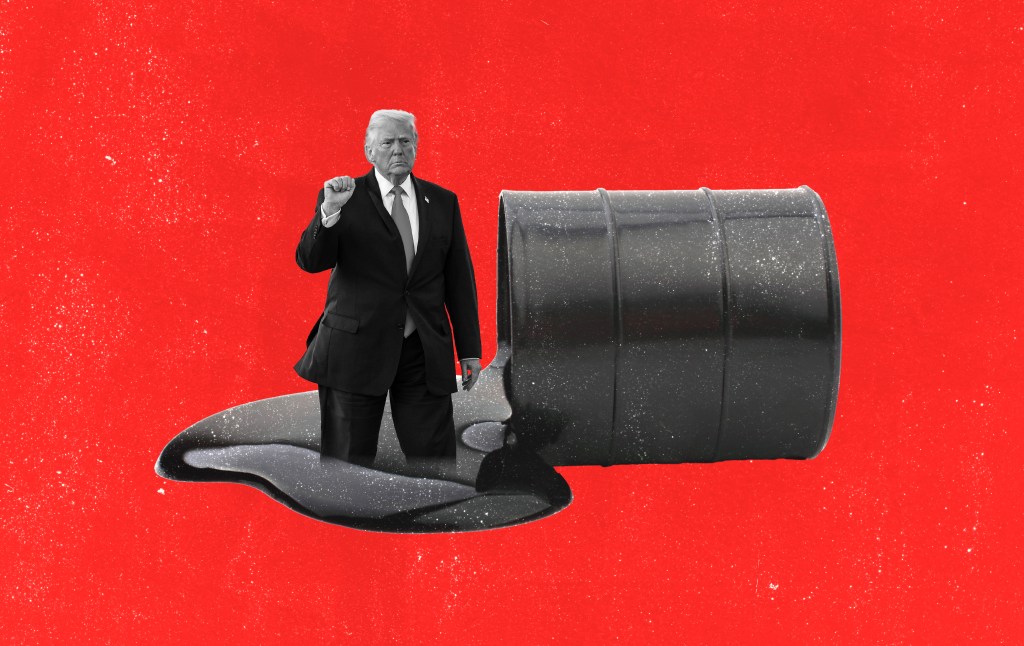
“If it were up to me, I’d take the oil,” the president of these United States said about his controversial approach to Iran. “I’d hold onto the oil. I’d profit from it.” Really? “If I had my choice … yeah, because I’m a businessman first.” Seriously? “To the victor belong the spoils,” he proclaimed—emphasizing that this is the United States of America. The example he cites, again, is Venezuela: “We’ve captured hundreds of millions of barrels [of oil] … over 100 million barrels already,” he claimed. “It paid for that war many, many times over.”
As with much of Trump’s rhetoric, this claim teeters between misrepresentation and bluster—and the real situation is more straightforward: U.S. buyers, including Chevron’s refining operation, are importing Venezuelan oil, while other buyers, notably Chinese refiners, have not pretended they aren’t purchasing Venezuelan crude, which had been under heavy sanctions. The U.S. Treasury is supervising the finances of PDVSA, Venezuela’s state-owned oil company. Yet PDVSA’s joint operating partners include major U.S. energy giants such as Chevron, which will undoubtedly be compensated for their part in extracting that oil. Trump speaks of Venezuela’s oil as if he personally hijacked a car on the streets of Caracas and is seeking to profit from U.S. intervention in the Venezuelan oil market, but the notion that the United States has simply “taken hundreds of millions of barrels” of oil from Venezuela—likened, for instance, to a casual pop-culture analogy at a Walmart counter—is not accurate.
I suppose one could say about Donald Trump that, despite a long history of legal entanglements in public discourse, in this instance he is not actually acting as a criminal—he merely aspires to such a role.