A sitting U.S. president has floated the possibility of ordering the destruction of an entire civilization. This is the same president who told an interview that international law is something he “doesn’t need,” and the same president who appointed as his secretary of defense a figure who has repeatedly belittled the importance of law and the advisory role that legal counsel plays in relation to U.S. combat operations.
combat operations.
Taken together, President Donald Trump’s rhetoric and stance toward the laws that govern how war is waged erode decades of effort by our armed forces to ensure that all military operations are conducted—and perceived to be conducted—in accordance with what is today known as the law of armed conflict (LOAC) or international humanitarian law. Indeed, when most people consider the relationship between LOAC and U.S. military actions, they do not recall steady compliance; they recall breaches. My Lai, Abu Ghraib, Haditha, Guantanamo. Highlighting these incidents—and the condemnation that follows—two undeniable truths emerge. First, these events are genuine outliers from the norm of compliance. Second, such violations are perceived by the public as incompatible with the values of the nation for which our service members fight.
War is a brutal enterprise. In no other context does law, whether international or domestic, permit the state to wield such overwhelming force: to employ deadly force as a first resort; to seize and detain individuals indefinitely solely on their association with an enemy armed group; to try captives for alleged war crimes before military tribunals. Yet even in war, ends do not always justify the means. Over the centuries a robust body of international law—rules and principles accepted as binding by all nations—has evolved to strike a thoughtful balance between the need to bring an foe to heel efficiently and the equally pressing obligation to limit the humanitarian suffering caused by war. No LOAC rule better embodies this balance than the so‑called proportionality principle, which bars attacks on enemy military objectives when the attacking commander judges the risk to nearby civilians and civilian property to be excessive in relation to the anticipated concrete and direct military advantage the attack would yield.
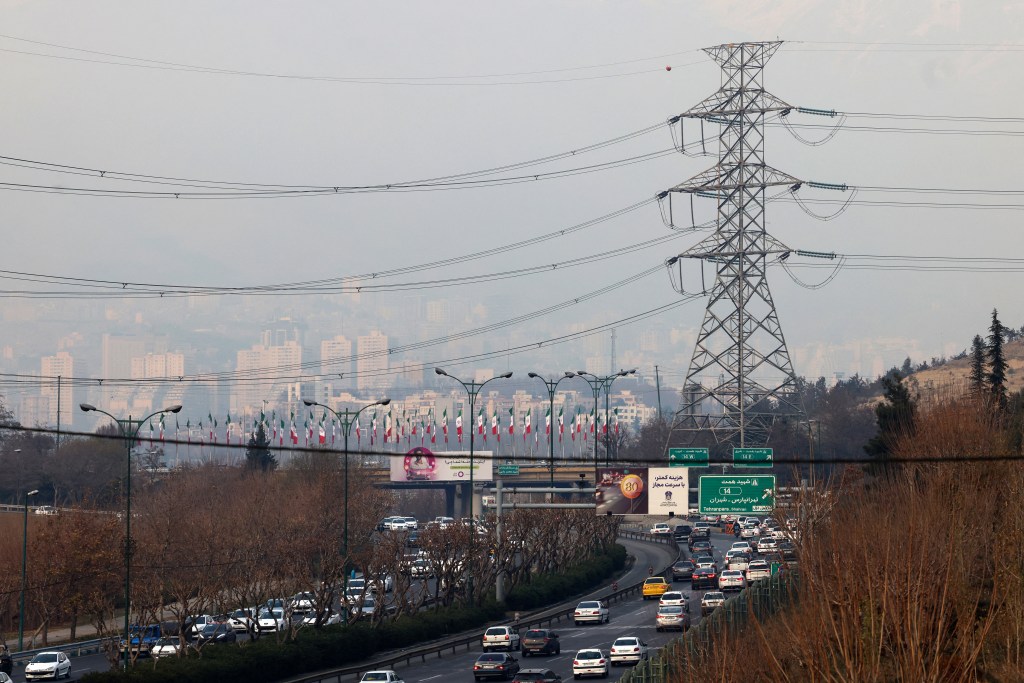
This balancing of interests has surfaced in discussions surrounding the recent U.S. and Israeli confrontations with Iran. Even before President Trump’s troubling threat to annihilate a civilization, his stated intent to wreck Iran’s power grid, its energy production capacity, every bridge in the country, and perhaps even its desalination plants drew widespread rebuke. Some commentators quickly invoked LOAC provisions that bar attacks on civilian objects to condemn such threats. In truth, the evaluation is more nuanced.
First, the law of armed conflict outright prohibits indiscriminate attacks. Notably, indiscriminate is defined as treating multiple distinct targets as a single general target—a categorical rejection of the area bombardment strategy known in World War II. And for good reason. The legality of striking any target rests on an individualized assessment by U.S. military commanders with the support of the operational planning staff, and when an attack risks civilians or civilian property, the assessment must include feasible risk‑reduction measures (such as changing the timing of the strike or employing a different weapon or tactic) and a final proportionality judgment. Drawing a circle around a country—and asserting, as the President effectively did, that thousands of objects are now legitimate targets—undermines the protective purpose of these rules and the assessment process.
The president’s rhetoric sadly ceded this high ground at the very moment our operational commanders were struggling to retain it against an enemy who did not deserve it.
That said, this does not mean that objects—or even people who are not inherently military in nature (such as a tank, a military airfield, or a soldier)—are categorically exempt from attack. On the contrary, under the LOAC any place or person may, under certain circumstances, qualify as a legitimate target. But to satisfy that rule, there must be a good‑faith and objectively reasonable assessment that the “object or thing” is making an effective contribution to the enemy military effort and that striking it will provide our forces with a definite military advantage under the conditions that exist at the time of the decision to attack. The italicized qualifiers were designed to prevent speculation as the basis for an attack. It is also noteworthy that while the United States never ratified the treaty that adopted the “military objective” standard—Article 52 of the 1977 Additional Protocol I to the 1949 Geneva Conventions—the rule was incorporated into the U.S. Army Field Manual on the Law of Land Warfare in 1975—two years before that treaty opened for signature—and it is also reflected in the Department of Defense Law of War Manual.
This means that if the President’s threat had evolved into an attack order, it would almost certainly have compelled unlawful strikes, placing commanders in the unenviable position of resisting or disobeying those orders. Yet it would be incorrect to say that striking any of those targets would automatically constitute a LOAC violation or a war crime. Power‑generation facilities and bridges are commonly treated as lawful targets (oil production facilities and desalination plants present more complex assessments but can also fall into that category). However, the determination must be made case by case in relation to a specific operation; a blanket, per‑se designation cannot be the basis for action unless the target truly meets the military objective criterion and, if there is a risk of incidental civilian harm or collateral damage, the attacking commander must implement feasible precautions and refrain from any attack judged to breach the proportionality rule.
So what impact does the president’s rhetoric have? No one should overlook the steadfast commitment of the operational forces to LOAC compliance. After years of experience, U.S. commanders directing these missions almost certainly grasp the imperative to demand and ensure such compliance. It is likely that the bombastic tone would be filtered through the normal target analysis and selection process used in these scenarios, so that only targets meeting LOAC requirements would appear on the joint targeting list. Nevertheless, the rhetoric undoubtedly carries adverse consequences.
First, if the president’s threat had been carried out as an attack order, every strike on any object within the specified scope would be instantly perceived as illegal, even if the facts and circumstances would demonstrate LOAC compliance. In short, the president set the conditions for a loss of legitimacy—a critical aspect of effective joint operations that hinges on actual and perceived LOAC compliance. Second, his rhetoric diverted global attention away from Iran’s broad LOAC violations. Instead of focusing on Iran’s attacks on civilian population centers, indiscriminate use of force, strikes on civilian objects in neutral states, and illegal threats to target neutral shipping in international chokepoints, the world’s focus shifted to threats voiced by a U.S. president that, if carried out, would almost certainly amount to war crimes. As retired Lt. Gen. Hertling observed in The Bulwark:
In military practice we strive to hold the high ground because it clarifies our view and strengthens our ability to act decisively. As warfare has evolved, that notion has taken on a broader meaning. The high ground now represents a set of principles and values that guide decisions when judgment is unclear and the path ahead is uncertain or contested.
The president’s rhetoric sadly ceded this high ground at the very moment our operational commanders were struggling to retain it against an enemy who did not deserve it.
Finally, and perhaps most troubling, bombastic rhetoric that contradicts the laws of war undermines the moral clarity that our service members—who risk their lives for the country—have a right to expect. The moral weight of ordering an attack, especially when it will cause unavoidable deaths and injuries among civilians, is hard to grasp. The LOAC provides the framework for this moral clarity. When leaders at the highest levels downplay the importance of this law or imply that operations might proceed in defiance of it, they erode that clarity and inject unnecessary moral hazards into the performance of duty.
These laws matter. They matter because they preserve a rational balance between the necessities of combat and humanitarian protection. They matter also because they shield our own forces—not merely from potential consequences if captured by the enemy, but by enabling them to live with the consequences of their actions. Telford Taylor, a U.S. prosecutor at Nuremberg, encapsulated this in his work Nuremberg and Vietnam: An American Tragedy:
Another—and, in my view, even more important foundation of the laws of war is their role in dampening the corrosive effects of mortal combat on those who fight. War is not a license to kill for personal gratification, to satisfy perverse impulses, or to eliminate someone who irks you, nor is it a license to inflict suffering for its own sake or for revenge. War is a statecraft obligation to pursue policy aims; it does not authorize wanton violence. Unless troops are trained and required to distinguish between military and nonmilitary killings, and to hold life in high regard so that needless death and destruction is rejected, they may lose that discernment for the rest of their lives.
The Iran confrontation has already eroded the perceived legitimacy of U.S. military actions, and bombast like that employed by the president has likely contributed to that erosion. The formidable challenges confronting our forces in combat are daunting enough without adding unnecessary moral hazards to the calculation. To preserve U.S. legitimacy and shield our troops from such moral hazards, political and military leaders who authorize decisive combat actions must consistently demonstrate—and demand—strict compliance with the law that is essential to our forces.