
Editor’s Note: This is the eighth entry in a new Dispatch series titled “Where I’m From.” Each Saturday, a writer shares a meditation on his or her hometown—a bustling metropolis, distant desert outpost, quiet suburb, or somewhere in between—and what makes it unique. The goal? Highlight voices—and good writing—from every corner of these United States.
I knelt in the church, tracing the darkened grooves on the pew in front of me with my pinky finger. Light streamed through the stained glass above, scattering across the room in blues, greens, reds, and yellows. A sea of sun-kissed faces filled the pews, hair bleached pale by chlorine and weathered by another Texas summer. Up front, the mosaic of Jesus looked upward in triumph: long brown hair, white robe, beard. The Mass carried on. My thoughts wandered into a daydream about the cute boy I had been crushing on. Was he singing the hymns? Where did he go on vacation? If I passed him in the communion line, should I try to meet his gaze and smile? Before I knew it, the priest was strolling down the aisle and my mother was shoving the weekly bulletin into my hand, so she could pull down the kneeler and pray.
Fifteen years later, I catch sight of my mother in the same spot, praying. The only notable change is a few more gray hairs on her head. It’s odd, the way memory operates in a place like Dallas. Warm more days than not, my childhood there existed almost entirely in sunlight, afternoons spent sprinting home to swap into shorts and a T-shirt, then back outside, pursuing the last hours of daylight until the horizon swallowed the sun. In those years I lived on the city’s edge, in a place called Garland, Texas, beyond the Rose Hill Road exit. The long country road back to our house was deeply rutted, and looking out the windows you could see horses grazing for what felt like a mile. Sometimes the ranchers would walk the horses down our alleyway neighborhood, which was charming until you realized their—droppings—would leave quite a mess. Endearing, perhaps, but smelly?
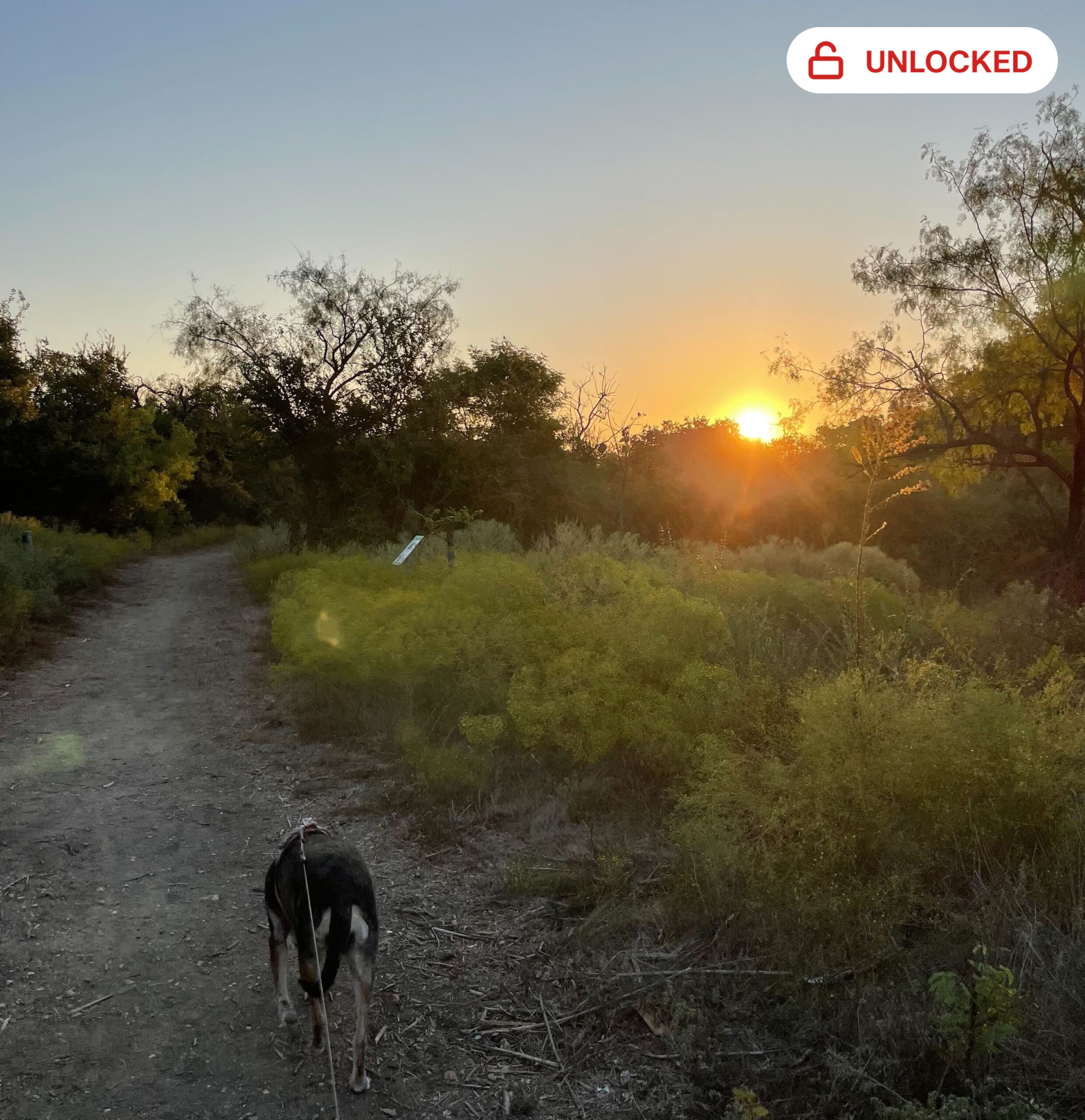
We had two dogs around that time, Cookie and Coco. My older sister bought Cookie, a small poodle/schnauzer mix, after an attempted robbery. I was alone when a stranger kicked open the back door. I bolted from the house, cordless home phone in hand, and called 911. My mom wouldn’t let me stay home alone after that, and my sister’s fix, unbeknownst to everyone else, was to bring home a guard dog. That guardian was about 20 pounds soaking wet, seven years old, and not exactly qualified for the job. I loved her instantly. We eventually adopted another dog, a puppy this time, named Coco. I’d haul them both to a nearby pond, Cookie dangling from a backpack, Coco tugging at the leash, and I’d let Coco dash through the tall bluestem grass while the power lines stretched toward the sunset. There were trees encircling us on either side, and we were in our own little enclave, a hidden world. Sometimes Coco would leap into the pond and, no matter how hard I tried to dry her off, my mother somehow always knew I’d let her off the leash. I could walk there for miles. But I usually settled for a stroll to the Sonic down the road.
I was introduced to another facet of Dallas in sixth grade. I switched schools, and the parents of my new friends were in higher tax brackets. I felt out of place wandering the hallways in a used uniform from the summer resale shop, my skirt longer than those of the other girls who had theirs hemmed. I stepped into my first mansion during a friend’s sleepover. The wealth in Dallas is often linked to oil, yet most of the money I observed up close came from construction managers, architecture firm directors, and law partners. The culture of these families, if the Dallas social scene can be said to have a single one, ran on spray tans (always visible at the wrists), teeth that shone as brilliantly as Jesus’ robe in the transfiguration story, and Cowboy boots. A blazer when the evening demanded it. The neighborhoods kept their mansions discreetly hidden behind thick hedges and ancient trees, so you only caught glimpses of the estates’ scales as you drove by.
Although Texas is famous for its bluebonnets, in these neighborhoods magnolias and lavender lay about lazily in the spring air as you walked the streets. At night, the air hung still, with the occasional whisper of a breeze. There’s nothing particularly extraordinary about Dallas’s geology, but when you look up, you feel as though you could fall off the planet. It’s true that the stars glow brighter in Texas, and the endless canopy above sparkles, linking you with the cowboys and frontiersmen who conquered this land, gazing outward into the unknown just as this place once did.
It’s March and a red ball lands at my feet. I glance up to see a small boy, perhaps two, craning his neck between the balcony grates. “Mi pelota!” Spanish threads through English in Texas. I toss the ball back, and immediately the wind carries it away in the opposite direction. Winters in the South aren’t very cold, but each year a freeze sweeps through in late January or early February, giving people a season to celebrate saying goodbye to the chill. When the winds pick up, it signals that spring has truly arrived. The sky grows dark and gray because of major storms, often contrasted in the distance over bright green grass. There isn’t much to do when weather turns foul. If you’re unlucky and the power goes out, a book or a challenging puzzle can help.
At one point my family moved from our house on the outskirts of the suburbs to a small downtown apartment, where I was introduced to the city’s bar scene. I would walk Coco along the Katy Trail, an urban greenbelt, passing hangout spots and beer gardens that were always packed. This is what most people are familiar with when they think of Dallas. Bar-b-cue, urban sprawl, and lots of people. I people-watched from a nearby park and daydreamed about my future—would I be drinking with my friends on a Tuesday night watching the sun set? At that point I thought I was staying in Dallas, but COVID and a million small choices brought me to Washington, D.C. Now I go back fairly often because my family still lives there. Some things have changed—new buildings, more people—but you can find pockets of heaven that give Texas its unique flavor.
I think that’s what a lot of outsiders don’t know about Dallas. That, throughout the city, hidden small parks and nature reserves lend themselves to some seclusion. If you fly into the city during the day, you’ll see miles of green as you land. When I visited Ireland, I couldn’t help but notice similarities between the two views. And that’s what greets me each time I come home. After living in a cosmopolitan city like D.C., it’s nice to come back and be greeted by little worlds that not many people know about.