There exists in Washington a belief that the U.S. campaign against Iran marks a pronounced setback for China. Proponents argue that by initiating Operation Epic Fury, Washington has not only weakened Tehran but also diminished China’s influence across the region and beyond. A corollary to this view is the claim that Washington has sent Beijing a clear deterrent signal with this operation, aligning the conflict with a broader strategy aimed at countering China.
These assertions rest on several questionable premises, namely that Iran is China’s most crucial partner in the Middle East, that China relies entirely on the region for its energy, and that this display of American military power will curb Beijing’s ambitions toward Taiwan.
But such beliefs miss the mark about China’s priorities in the Middle East and beyond. They also overlook the inconsistencies in President Donald Trump’s own approach toward the country.
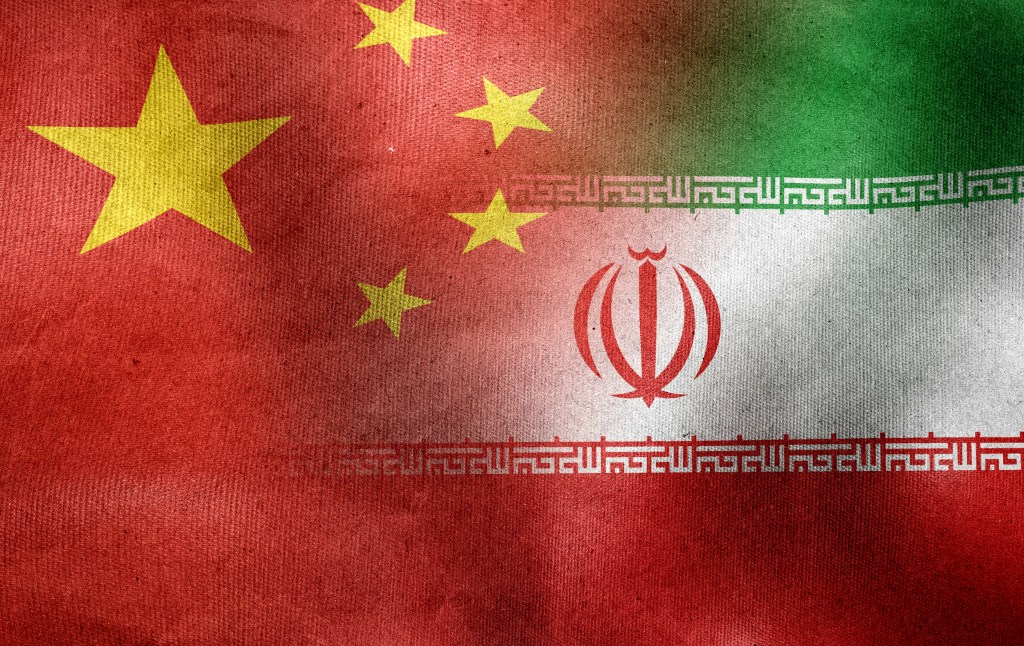
Iran is not China’s most important relationship in the region. It is deeply rooted historically, certainly, and may be among the oldest ties in the world. It also shares an ideological stance against the Western-led international order. Yet it is neither exceptionally close nor even symmetric in today’s arrangement. Beijing has yet to fulfill a substantial portion of its $400 billion commitments under the 25-year strategic partnership signed in 2021. And while China’s purchases of Iranian oil are vital for Tehran’s survival, they are driven more by economic calculus than any sense of Chinese benevolence, as much of the revenue from those sales is redirected back to Chinese firms.
Moreover, China’s conventional military support to Iran is modest and typically delivered with a degree of plausible deniability, such as the transfer of dual-use sodium perchlorate propellant for Iran’s ballistic missiles. For a country with an increasingly self-sufficient defense-industrial base and a goal of becoming a leading global arms exporter, China’s hesitancy to provide more advanced weaponry to a partner like the Islamic Republic—one that relentlessly seeks access to cutting-edge arms—speaks volumes.
Today, China’s most consequential regional relationships lie across the Strait of Hormuz. A large share of China’s regional investments, engagement, and arms flows go to the Arab Gulf states. Nearly two-thirds of China’s overall trade with the region, Europe, and Africa passes through Emirati ports alone. While Iran’s crude-oil exports to China account for more than 90 percent of Tehran’s total exports, they represented only about 11 percent of Beijing’s total imports in 2024. In the same year, China sourced 14 percent of its crude from Saudi Arabia, 11 percent from Iraq, 7 percent from Oman, and 6 percent from the United Arab Emirates. Saudi Arabia and the UAE stand as China’s premier trading partners in the region. The UAE, in particular, hosts more than 15,000 Chinese companies and is, according to Beijing, the top destination for Chinese outward investment in the Middle East. There is nothing in the China–Iran relationship that approaches the scale of cooperation and investment Beijing has with the Gulf states in AI, the digital economy, and green energy—areas crucial to the Gulf’s strategy to diversify their economies.
This isn’t to say Iran has no value to China. China’s ties with Tehran grant Beijing a distinctive diplomatic lever in the region (as evidenced by the China-facilitated Iran–Saudi Arabia rapprochement) and provide influence over Iran’s proxies (which proved useful for Chinese firms navigating the Houthis’ blockade in the Red Sea). To sustain this connection, China offers Iran a largely sanctions‑resistant path to oil sales and a modest level of military and intelligence assistance. Yet China has also accumulated energy reserves to bolster resilience and prevent the Iran relationship from becoming a liability. And while China’s support for Iran during this conflict is concerning, it pales beside what Iran’s other partner, Russia, has supplied.
Thus, it is understandable that some analysts might view Operation Epic Fury as part of a broader Trump-era effort to counter China globally. Yet the reality of China’s regional priorities, together with the administration’s rhetoric and actions in this great-power competition, paints a bleaker picture.
The president’s stance toward China is characterized by both competition and cooperation. On one front, the administration is swiftly decoupling critical supply chains from dependence on China, especially with regard to essential minerals. This effort is commendable and long overdue. Trump has also prioritized holding the Chinese Communist Party (CCP) accountable for its role in America’s opioid crisis, specifically the shipments of Chinese-made fentanyl precursors to North America. Interwoven with these aims is a drive to reduce the United States’ trade deficit with Beijing.
On the other hand, Trump has described his approach to China as fundamentally collaborative. He has publicly asserted that America and China could “solve all of the world’s problems” if they cooperate, and he has urged Beijing to join U.S. efforts to open the Strait of Hormuz. Even tariffs—the hallmark of his China policy—are viewed as tools to secure a long-cherished objective: a trade agreement with Beijing. Moreover, Trump has issued tariff threats to deter China from arming Iran, only to retreat when Beijing appeared to disregard his warnings.
Trump’s fusion of competition and cooperation fits his dealmaking impulse, yet it exacts a strategic toll. Last year, the administration approved the sale of advanced AI chips to Chinese firms that partner with the People’s Liberation Army. National-security experts warned that these chips would enable AI model training for combat scenarios against U.S. forces. Trump also approved a deal that left TikTok’s powerful algorithm under ByteDance, a Chinese company, and susceptible to ongoing CCP influence.
The administration has also reportedly pressured Japan to limit its public criticisms of Beijing’s belligerence toward Taiwan. The irony is palpable: U.S. officials have urged allies and partners for years to treat the China threat with greater seriousness. When one of Washington’s closest allies did precisely that, it faced only public quiet and private admonition from the United States.
As things stand, the administration’s refusal to make trade-offs yields an internally inconsistent approach to America’s preeminent bilateral relationship in the 21st century. Striving to disentangle supply chains from Beijing while permitting firms like Nvidia to sell advanced AI chips to CCP-connected entities resembles uprooting weeds one day and sowing new ones the next. Holding China accountable for its role in America’s fentanyl crisis while preserving TikTok’s algorithm under ByteDance ownership equates to trading synthetic opioids for digital drugs. Dampening allies’ willingness to criticize Taiwan sends a risky signal to Xi Jinping that Washington prioritizes trade deals over Taiwan’s political future.
A coherent strategy toward China would more clearly separate rivalry from cooperation. It would challenge Beijing on issues of strategic significance—supply chains, critical minerals, AI export controls, fentanyl, TikTok—and bolster deterrence in theaters critical to China, especially the Indo-Pacific. It would also pursue Middle East interests without compromising America’s credibility and deterrent capabilities, while imposing real economic costs on China. Regrettably, none of this seems to be materializing right now.
Without this kind of strategic logic, Trump risks weakening America’s hand against the CCP. If the conflict persists, essential stockpiles needed to deter China in the Indo-Pacific could dwindle further. The United States’ capacity to counter CCP propaganda about the war will remain hampered by cuts to foreign broadcasting, and its ability to counter initiatives like the Belt and Road Initiative could be undermined by the dismantling of USAID.
Prolonging the regional crisis means more time and resources spent in the Middle East, increasing exposure to American interests in China’s primary arena of competition—the Indo-Pacific. This risk does not invalidate the case for action in the Middle East but underscores the reality of high-stakes strategic compromises. The conflict has undeniably inflicted headwinds on China’s economy, yet the costs to the U.S. strategic position have been far greater to date. Analysts who claim that weakening Iran is a clever tactic to counter China are overlooking the broader landscape.