
On June 1, 2025, Mohamed Sabry Soliman stepped onto Boulder, Colorado’s Pearl Street Mall carrying a backpack-mounted sprayer rigged to dispense gasoline and a container housing 18 Molotov cocktails. He moved toward a weekly rally urging the release of Israeli hostages held in Gaza, lit two of the incendiaries, and hurled them into the crowd.
Thirteen people were injured in the assault, and Karen Diamond, an 82-year-old member of Boulder’s Jewish community, died of her burns 24 days later. Soliman told investigators he had planned the attack for a year, that he “wanted to kill all Zionist people,” and that he would do it again. He faces 184 state counts, including two counts of first-degree murder, as well as 12 federal hate-crime counts. He has pleaded not guilty, and his federal trial is set for November.
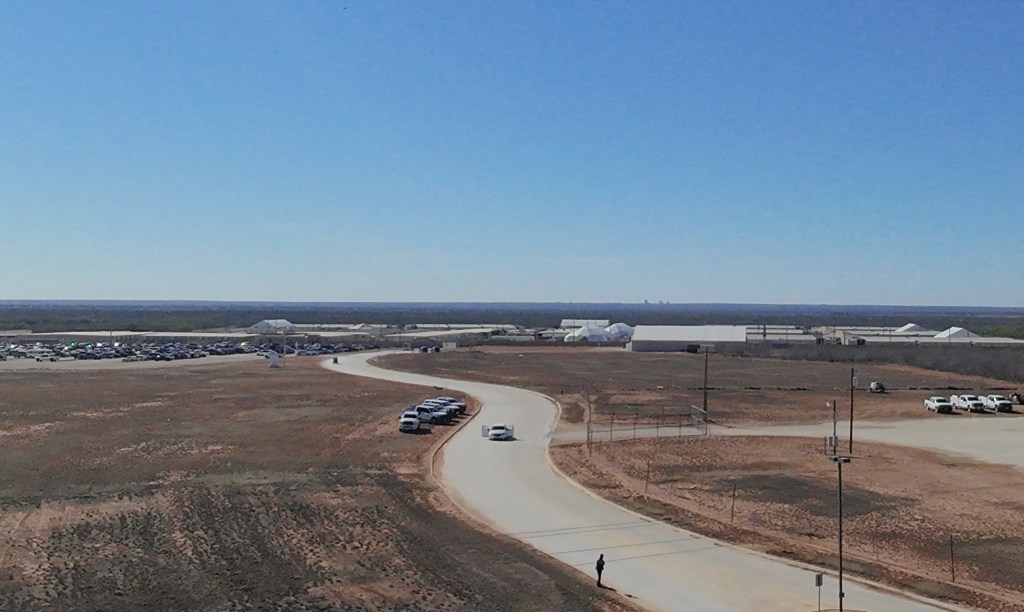
Two days after the assault, Immigration and Customs Enforcement (ICE) detained Soliman’s wife and five children at their home in Colorado Springs and transported them to the South Texas Family Residential Center in Dilley, Texas. That afternoon, the official White House X account posted that the family “COULD BE DEPORTED AS EARLY AS TONIGHT” and, 30 minutes later, that “Six One-Way Tickets for Mohamed’s Wife and Five Kids” were forthcoming.
The family remained in detention until last week, when a federal magistrate judge ordered their release, stating that there had “never been any evidentiary finding that [the family members] themselves were affiliated with [the] act or even had knowledge of its occurrence.” Within 48 hours of this release, ICE re-arrested them at a routine check-in and put them on a deportation flight, but two federal judges’ emergency orders forced the flight to reverse course mid-air.
The case raises two distinct questions: whether immigration enforcement against family members of a criminal suspect is appropriate when no individualized basis for enforcement has been established, and whether the executive branch is once again defying federal court orders.
What is the family’s connection to Soliman’s attack?
Soliman told investigators that he acted alone, stating that “no one, including his family, knew about his planned attack” and that “he never talked to his wife or family about it.” The Boulder police arrest affidavit records the same statements. At the family’s September 2025 immigration bond hearing, an FBI agent testified under oath that the bureau had found no evidence the family had advance knowledge of the attack and that the family had cooperated with the investigation.
Hayam El Gamal, a 41-year-old network engineer, was Soliman’s wife at the time of the attack. She and Soliman had an arranged marriage, and Soliman had been estranged and was largely living separately from the family before June 2025.
After Soliman’s arrest, El Gamal filed for divorce; the divorce proceeded while the family was held at the Dilley detention center. The family has used the surname El Gamal since the divorce, though some court filings still name the eldest child as Habiba Soliman.
Uncertain immigration status.
The family entered the United States legally on B-2 tourist visas on August 27, 2022. Those visas authorized a six-month stay and expired in February 2023. On September 29, 2022, Soliman filed a Form I-589 application for asylum in Denver, listing El Gamal and the five children as derivative dependents. Independently, El Gamal filed an EB-2 employment-based immigrant visa petition, the category for “professionals with advanced degrees.” Both applications were pending and had not been adjudicated when Soliman was arrested.
The family’s immigration status between February 2023 and the time of the Boulder attack is murky. They were, in U.S. Citizenship and Immigration Service terminology, in a “period of authorized stay” but did not have lawful immigration status because their B-2 tourist visas had expired.
After Soliman’s arrest, the family was placed in standard removal proceedings (a pending asylum application doesn’t prevent the government from initiating removal proceedings; the asylum claim is decided as a part of the case). An immigration judge issued a final order of removal on December 29, 2025; the Board of Immigration Appeals (BIA) affirmed the order on April 22, 2026. By that date, the family had filed a renewed asylum application, which has not been adjudicated.
Under the REAL ID Act of 2005, only a federal appeals court can review a removal order. The administration’s position, reflected in DHS’s public statement that the family “received full due process” before being issued a final order of removal, is correct insofar as the removal order itself completed a routine administrative course and that no district court has the authority to block it. But the REAL ID Act also specifies that district courts retain habeas jurisdiction to determine whether immigration detention violates the Constitution, independent of whether the removal order is valid. The Supreme Court affirmed this principle in Zadvydas v. Davis (2001) and Demore v. Kim (2003). And under the All Writs Act, a court exercising habeas jurisdiction may issue orders, including stays of removal, necessary to preserve the petitioners and the case before it.
Magistrate Judge Elizabeth Chestney’s April 20 Report and Recommendations rested on this framework. Instead of reviewing the BIA’s removal order, she found that the family’s continued detention violated the Fifth Amendment, writing that it was “unquestionable that [the family members] have been targeted by the Government.”
U.S. District Judge Fred Biery adopted Chestney’s recommendation on April 23, ordered the family’s immediate release with electronic monitoring and reporting conditions, and denied the government’s request for a stay pending appeal. He also ordered the government not to remove the family while their renewed asylum application remained pending.
The administration’s view, articulated by Department of Homeland Security acting Assistant Secretary Lauren Bis, is that Biery is an “activist judge” interfering with a final removal order. There is a principled version of that argument: The REAL ID Act was designed to limit district court intervention, and using habeas jurisdiction plus the All Writs Act to stay removal pushes hard against that limit.
But Biery found that holding this family without an individualized justification violated their constitutional rights. That is the kind of ruling that only a federal court can make, because immigration courts are part of the executive branch and do not have the authority to declare that the executive’s own conduct is unconstitutional.
Back in custody.
After the family members were released from Dilley on April 23, supporters drove them to Colorado. Two days later, in compliance with the reporting conditions Biery had imposed, the family reported for an ICE check-in at a field office in Centennial, Colorado. Within roughly an hour, ICE officials detained them, told them they were being deported to Egypt, and transported them to a Denver-area airport. They were placed on an aircraft that departed for Willow Run Airport outside Ypsilanti, Michigan, a regional hub for ICE charter deportation flights.
Family members alerted their attorney, Eric Lee, who posted the tail number of the aircraft on X and filed emergency motions in the Western District of Texas, the Fifth Circuit, and the District of Colorado. At 12:52 p.m. Mountain Time, Judge Biery issued an emergency order staying their removal. At approximately 6:43 p.m., Judge Nina Y. Wang in the District of Colorado issued a parallel order barring removal to preserve her court’s jurisdiction over a new habeas petition filed that day.
According to FlightAware data cited by the Colorado Sun, the aircraft had taken off from Michigan on the next leg of its journey but reversed course over Lake Erie and returned to the airport at 3:32 p.m. Mountain Time. It then flew back to Denver, and the family was released around 11 p.m.
Whether the April 25 re-arrest violated Biery’s order is the contested question. The strongest argument for the government would be that Biery’s order applied to the Dilley detention specifically and did not categorically bar a different ICE field office from acting on a final order of removal.
But ICE has failed to publicly cite any new facts, evidence, or changed circumstances that would distinguish the latest detention from the prior one that Biery had found to be unconstitutional.
The family’s counsel maintains that Biery’s order explicitly halted removal proceedings and rested on a constitutional finding that further detention of this family without individualized justification violated due process. With no new facts in the case, ICE re-detained these family members within 48 hours and attempted to remove them. That, the family’s lawyers argue, was not independent enforcement action but an attempt to circumvent the order’s purpose.
What happens next?
The government’s anticipated appeal of Biery’s release order is pending before the Fifth Circuit Court of Appeals; emergency motions filed by the family’s counsel on April 25 remain pending there as well. Judge Wang’s habeas case in the District of Colorado is in its earliest stages. The family has until approximately May 22 to file a petition for a review of the BIA’s removal order in either the Fifth or Tenth Circuit, where the merits of that order will finally reach an Article III court. The family’s renewed asylum application, based on changed circumstances including the divorce and the risk of persecution upon return to Egypt due to publicity about their case, is pending before the immigration courts.
“They have due process rights to have those asylum claims be heard,” Violeta Raquel Chapin, an associate dean at the University of Colorado Law School, told CBS News. “And for them to be able to present evidence about why they need asylum, for the government, then, to present their evidence about why they should not be granted asylum—it has to be done in a court of law because those are the rules that we have. Chaos ensues when everybody stops following the rules.”