
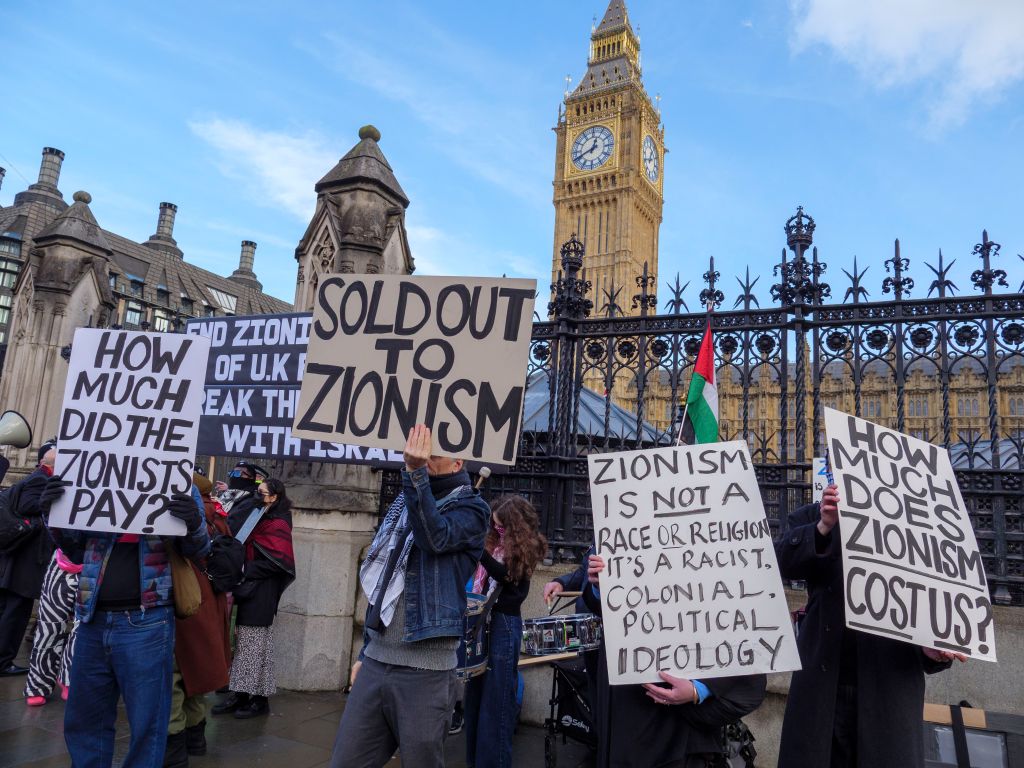
In a recent contribution for the New York Times, Ezra Klein defended the anti-Israel Twitch streamer Hasan Piker by contending that anti-Zionism has moved beyond fringe circles into the mainstream, asserting that “anti-Zionism is gaining traction as a reaction to Israel’s actions,” Klein states.
There are indeed poll results suggesting waning support for Israel among certain segments of the population.
In February, a Gallup poll indicated that more Americans felt sympathy for Palestinians than for Israelis, 41% vs 36%. Among Democrats the gap widened: 65% expressed more sympathy for Palestinians, while 17% favored Israelis. Among 18-to-34-year-olds, 53% leaned toward Palestinians and 23% toward Israelis.
Trying to account for this trend, Klein writes:
The version of Israel known to younger generations differs markedly from what older generations recall. In response to the October 7 brutality, it conducted a sweeping invasion of Gaza, inflicting widespread devastation and casualties that exceed 70,000 Palestinians, seizing more than half of the territory and confining over two million Gazans to the remaining areas. Daily life there remains severe. The prospect of a two-state arrangement has been undermined by the fragmentation of the West Bank into settlements, persistent settler aggression, and a heavy-handed approach toward the Palestinian Authority.
Personally Palestinian, I, too, harbor profound frustrations with the present arrangement and with the anguish caused by the Gaza war. For instance, I believe many Palestinian lives might have been saved if regional neighbors had aided in evacuations prior to Israel’s Gaza invasion following October 7.
Moreover, Israel’s warfare was punctuated by actions that many would deem dishonorable. Reuters authenticated images of Israeli soldiers joking with undergarments discovered in Gazan houses; later, the Washington Post corroborated over 120 photographs and clips from the fighting—many uploaded by soldiers—depicting glee at destruction, derision toward Palestinians, and advocacy for relocating Gazans within their own territory.
Yet I oppose Klein’s effort to normalize anti-Zionism. From witnessing the flaws and harms wrought by Hamas and other extreme factions within Palestinian society, I have seen how this worldview imposes immense suffering on Palestinians.
So what does anti-Zionism stand for? In ideological terms, it surpasses mere disagreement with Israeli government policies. It asserts that the Jewish state itself lacks legitimacy, that Israel should never have existed and ought to be dissolved. The events of October 7 served as a tangible manifestation of that belief.
The dispute surrounding the birth and ongoing existence of a Jewish state over the land traditionally claimed by Palestinians traces its origins well before October 7, 2023, and even prior to Israel’s 1948 founding. Hostilities arose in the 1920s and 1930s during the British Mandate, when two distinct nationalist movements—each seeking the same territory after the Ottoman Empire’s collapse—laid claim to the same acreage.
Klein tries to separate anti-Zionism from antisemitism. But the truth, as others like Adam Louis-Klein have noted, is that anti-Zionism is a troubling concept in its own right, irrespective of whether it equates to antisemitism.
What anti-Zionists neglect to acknowledge is that Israel is a tangible state with over nine million residents. It enjoys recognition from 163 United Nations member states. Therefore, calls for dismantling Israel amount to an entirely impractical aspiration.
Anti-Zionists may fancy that challenging Zionism will weaken Israel. In practice, their stance often strengthens the factions within Israel that oppose Palestinian sovereignty and harm Palestinians themselves.
How could millions of Israeli Jews be persuaded to relinquish sovereignty? Dozens of fundamental questions remain unanswered. For instance: who would oversee the army? Who would draft a constitution? By what means would Jewish security be assured, and by whom? And how would Palestinian security be safeguarded, and through what mechanisms? How could cycles of revenge be prevented? In fashioning a single state that unites Israelis and Palestinians, how would identities be harmonized? How would property claims be resolved? Which political authority could earn sufficient trust from both communities to implement such a plan?
The sole concession anti-Zionists typically acknowledge is a call for boycotts and sanctions against Israel until its government agrees to dissolve. Yet a deeper reflection on what that would entail reveals its impracticality.
Global technological advancement today depends significantly on Israel. Israeli innovations permeate computing, cybersecurity, farming, water systems, navigation, medical devices, semiconductors, and defense industries. Those who imagine selecting Israel out of existence rarely reckon with this reality. You may detest Israel or decide to shun a particular hummus brand—many do—but global commerce will not boycott its way to erasing Israeli technology. And even if a boycott were feasible, such pressure would not alter the basic truth that Israelis, especially Jewish Israelis who make up about three-quarters of the population, will not consent to dissolve their state.
Israelis recall the suicide bombings of the Second Intifada, the rocket assaults that accompanied Israel’s 2005 withdrawal from Gaza, and the events of October 7. To Israelis, calls to dismantle Israel equate to removing every safeguard that keeps them safe from jihadist forces intent on their destruction.
Admittedly, not all Palestinians endorse such a path. Yet no people willingly relinquishes sovereignty when surrounded by foes intent on harm or oppression. Israeli Jews will not disarm simply because activists abroad pledge “equality” from cities like London, Los Angeles, or Sydney. Hamas likewise rejects the prospect of Jews living as equal citizens under its rule, and its 2021 conference endorsed plans to enslave some Jews and deport others on a mass scale.
Consequently, it is not surprising to observe a rightward drift in Israeli public sentiment. A recent Maariv survey of first-time voters aged 18 to 22 showed 56% leaning right, while 44% of older voters did; just 8% of the younger cohort identified as center-left or left-leaning.
Anti-Zionists may imagine that challenging Zionism weakens Israel, yet in practice their stance tends to fortify the factions within Israel that resist Palestinian sovereignty and harm Palestinians. If you present Israelis with debates over settlements, there is room for disagreement; if you frame it as a dispute over borders, debate persists; if you frame it as about military occupation, disputes continue. But when the discussion centers on whether their state should endure at all, the argument shifts dramatically to questions about their own survival.
And in most cases, the international order does not strip a state of existence merely for its misdeeds.
Germany perpetrated the gravest crimes in modern history under the Nazi regime, yet a state named Germany continues to exist. Serbia offers another example: despite the horrors of the Yugoslav wars, a Serbian state remains.
Russia has perpetrated atrocities in Ukraine. China has brutalized Uyghurs and Tibetans. Turkey has suppressed Kurdish national aspirations. Pakistan emerged from partition amid violence. The United States was founded on slavery and territorial conquest. The historical pattern does not commonly conclude that states lose their right to exist merely for such acts.
Klein surveys Netanyahu, Gaza, the West Bank settlements, and the Israeli right and concludes that anti-Zionism is gaining appeal. I view the same factors and find anti-Zionism to be a profoundly harmful and destructive proposal.
The Israeli right already possesses its own coherent form of rejectionism. As Klein notes, Netanyahu has publicly rejected the creation of a Palestinian state. His coalition partners push even further: Bezalel Smotrich has proposed extending Israel’s border with Lebanon to the Litani River, and Itamar Ben-Gvir has repeatedly advocated relocating Gazans back into Gaza and promoting the Palestinians’ “voluntary migration” from the Strip; at a May 2024 ultranationalist rally, he asserted that Israel was “dedicated to returning to Gaza” and to settling there. Smotrich has also voiced maximalist ambitions for expanding Israeli control into Gaza, Lebanon, and Syria. The West Bank has already been parceled into settlements, and settler violence has intensified fear and danger for Palestinians living there—including my own relatives.
Yet a universal truth remains: neither side will relinquish its sovereignty, nor will either consent to dissolution or annihilation.
Adopting a compromise will undoubtedly be arduous. It will demand an extraordinary level of effort. History shows we have attempted such trajectories repeatedly and, regrettably, fallen short on numerous occasions.
A long roster of difficult questions awaits: borders, refugees, the status and governance of Jerusalem, security frameworks, settlements, recognition, demilitarization, water resources, airspace, and halting sites of worship—all requiring an immense, coordinated effort to settle. Yet tackling these matters still appears more desirable than the available alternatives, giving me some hope that a viable path could be forged.
What is equally evident is that anti-Zionism offers no credible solutions to these dilemmas. In fact, it asks Palestinians to endure ongoing hardship in the pursuit of dismantling Israel. It posits that true triumph is not the creation of a state for Palestinians, but the elimination of the Jewish state itself. Regrettably, this blueprint appears to guarantee enduring conflict and prolonged suffering.