
You’re reading Dispatch Markets, a weekly exploration of the forces steering economic growth—and those that impede it—featuring Scott Lincicome, Kyla Scanlon, Karl Smith, Marian Tupy, and Adam Ozimek.
With the midterm elections looming in the near future, a wave of unfavorable polls has unsettled farm-state Republicans. An October New York Times/Siena poll shows President Donald Trump trailing in the horse race (38 percent approval to 57 percent disapproval), and Senate contests in heavily rural Trump-won states like Iowa, Kansas, Nebraska, and nearby regions have become unexpectedly competitive. Among the chief alarm bells is Trump himself, who’s reacted in his customary way—not by undoing the policies that have clearly disadvantaged farming communities but by flooding these voters with more taxpayer dollars.
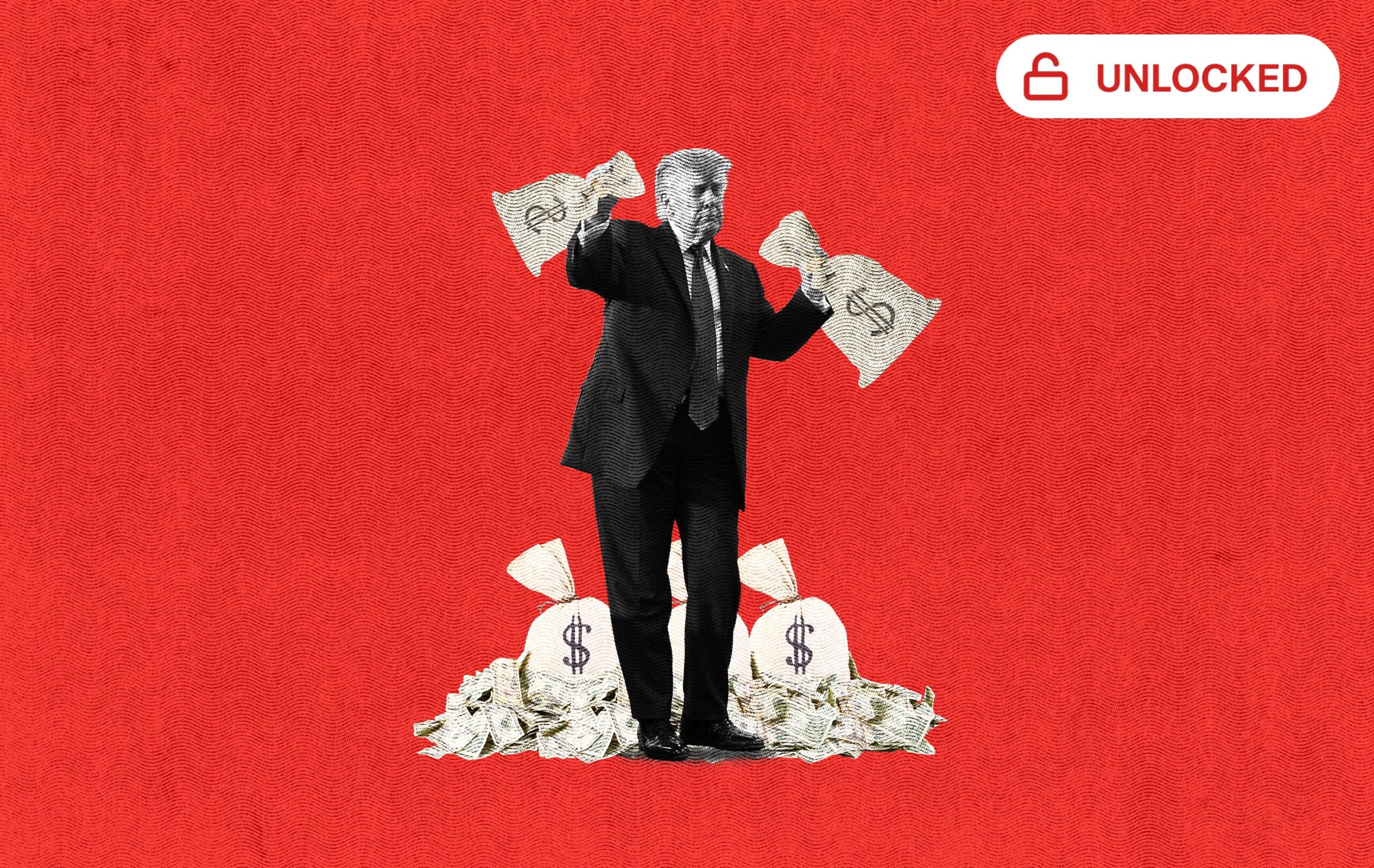
In just the last couple of weeks, Trump traveled to Kansas to unveil $8 billion in “Harvest Fuel Relief” aimed at mitigating record diesel prices, a problem largely traceable to Trump’s misfired Iran policy. Three days later, Vice President J.D. Vance visited Nebraska and introduced a plan to subsidize U.S. fertilizer production and (somehow) lower fertilizer prices, a relief both the Iran conflict and Trump’s tariffs had pushed up. Both efforts are the latest in a lengthy string of monetary—and non-monetary—bonuses to American farmers hurt by Trump’s own policies, totaling tens of billions of dollars that Congress hasn’t authorized, aren’t benefiting other equally affected groups, and sit atop billions in conventional government support for U.S. agriculture.
“We just got handed more campaign candy,” groused Nebraska Farmers Union President John Hansen after hearing Vance’s fertilizer gesture. Yet the true costs—fiscal, economic, and political—keep mounting.
Adding It Up
Before we crunch the numbers, let’s first revisit why U.S. farmers are hurting. As I noted last September, much of this “farmer crisis” was policy-driven: Tariffs on inputs and machinery, along with immigration restrictions and deportation actions, raised their costs; retaliatory moves abroad and the closing of overseas markets depressed selling prices; and subsidies and other programs discouraged adjustment. Add bad weather and high interest rates, and the outcome was a foreseeable mess: costs outrunning prices, rising bankruptcies, and worse.
The Iran conflict intensified these headwinds. Diesel and fertilizer prices—two indispensable farm inputs— surged once hostilities began in late February, adding thousands of dollars to already steep monthly expenses. The USDA’s September forecast shows farmers spending $5 billion more on fertilizer and $5 billion more on fuel this year, with median farm income expected to be a negative $467 for 2026. As several experts recently told the Washington Examiner, the administration wouldn’t have needed to bail out farmers last week if tariffs and the war hadn’t started, either.
But here we are, once again.
Since 2018, the Trump administration has unilaterally directed roughly $46 billion in “emergency” aid to farmers hurt by the president’s own policies. Nearly all of it flows through the Commodity Credit Corporation (CCC), which allows the president to dole out billions on farm “emergencies” without congressional oversight, and it excludes similarly dubious nonmonetary assistance for American farmers, pandemic relief, and other farm aid—not counting conventional subsidies. Before we dive into the other forms, let’s first itemize the direct payouts:
- During Trump’s first term, farmers received about $23 billion in ad hoc “Market Facilitation Program” funds, plus roughly $2.3 billion in government food purchases and $0.3 billion in export promotion. The package was intended to cushion farmers against lower prices and lost export demand caused by foreign retaliation to tariffs—most notably from China. And, just as now, the money carried an electoral motive: the early trade-war aid arrived in mid-2018, and Trump announced roughly $13 billion in CCC aid at a Wisconsin rally in September 2020.
- Trump’s second term has already added around $20 billion more to the “emergency” ledger: $11 billion for “Farmer Bridge Assistance” announced last December, another $1.6 billion for specialty crops, and the current $8 billion for diesel. In every instance, the political motive was evident—and championed by the administration at midterm farm-country rallies across the country.
In the broadest view, $46 billion is, unfortunately, a small rounding error in the federal budget, yet it remains sizable. Consider NASA’s annual budget at $24.4 billion this fiscal year, or the CHIP S Act’s $39 billion in manufacturing incentives spread over five years. Both measures received congressional approval, and each is smaller than the farm payouts we’re examining.
The $46 billion is also notable in terms of who foots the bill and who benefits. If the sum were distributed evenly, it would amount to taking about $290 from every American taxpayer and handing roughly $25,000 to each farm—funded through borrowing at rising interest rates. In reality, the allocation is likely more partisan: subsidies tend to flow to the largest producers rather than struggling family farms.
It’s also worth noting that this $46 billion only covers the commitments made to date. A fresh year of tariff and war-related pain could push totals higher, and if farmers remain strapped in 2028, who knows how much money they might receive.
Finally, the funding sits atop a broader array of special government support for U.S. agriculture. The Trump administration has leveraged other unilateral tools to pad farmers’ pockets:
- As noted, fertilizer-plant grants will cost taxpayers more than $573 million to supposedly cut farm fertilizer bills.
- In March, the EPA set record biofuel volumes for 2026 and 2027 under the Renewable Fuel Standard, adding an estimated $3 billion to $4 billion per year to farm income—funded by refiners and motorists. (Trump has pledged even more for Kansas voters if they keep voting Republican.)
- The administration reduced the minimum wage for guest workers on H-2A visas, saving farmers about $2.5 billion annually.
- Additionally, the White House exempted several farm inputs—from fertilizers to machinery and packaging—from Trump’s tariffs, while suspending trade remedy duties on Moroccan phosphate, yielding hundreds of millions in direct tax savings and billions more through lower U.S. prices.
There’s more—a plan for a Great American Cotton Initiative, a USDA/FTC probe into farm-equipment competition on October 7, wage- and price-related adjustments, apparel tariff preferences tied to U.S. cotton purchases, and other items—more than we can quantify here. Some of these measures would be sensible if applied broadly and openly, but they aren’t. Instead, they amount to targeted government transfers to U.S. farmers, wrapped in political strings.
And, of course, these measures sit atop the standard federal farm subsidies, which have been trending upward. As noted last year, Republicans’ One Big Beautiful Bill Act provided farmers with billions in “disaster” aid and trade-promotion subsidies, while also expanding existing subsidy programs. The Congressional Budget Office projects that the traditional subsidies will add about $59 billion to the farm-subsidy tab over ten years, and the USDA recently announced record payouts for 2025. Taken together, total government payments to farmers will amount to $55.4 billion in 2026—a nominal subsidy record that accounts for more than 30 percent of net farm income (up from roughly 8 percent in 2023 and 2024). And more than half of the 2026 payments will come from “emergency” or other ad hoc funds—$20.6 billion from Trump and $13.9 billion more from Congress—rather than from standard subsidy or conservation programs.
These government checks aren’t restoring a healthy farm sector so much as propping up a weaker one—primarily the result of public policy choices.
The costs and consequences.
None of this implies that some American farmers aren’t facing hardship. Market income has slipped (see chart below). Bankruptcies are climbing, and farm debt has surpassed $600 billion. A number of recipients of “emergency” government support have legitimate grievances with a government that raised their costs and truncated their exports by billions of dollars in both directions.
Yet the $46 billion remains a problematic solution for many reasons. Primarily, the payments aren’t calibrated to actual losses; they’re tied to acres and output, which means the largest operators collect the most. And, of course, they overlook the millions of other Americans—businesses and consumers—who generate far more economic activity than farming and are also suffering from higher costs and job losses caused by the same presidential policies, yet aren’t the focus of political action. The difference is that they don’t offer as much political payoff.
Yet the problems run deeper still.
First, this is a textbook case of the “policy quicksand” I warned about earlier this month—and it’s likely to invite more misguided policy down the line. Rather than fixing the initial-term trade policies that caused the pain in 2018–19, the administration bought farmers off. That would mask the damage from the trade measures and remove political pressure to reverse them, thereby encouraging Trump to push tariffs further this time—and to engage in a war as well. Any accounting of Trump’s tariffs must weigh these costs and risks alongside the more obvious ones (new taxes, higher prices, etc.).
The ad hoc support also solidified new demands for even more government intervention. Farm groups are already pressing to make expanded ethanol (E15) waivers permanent after five straight years of “temporary” ones, and we’re now on round three of the supposedly temporary “bridge payments” that the trade wars started eight years ago. Since Trump has shown little interest in ending the policies that caused this mess, we should expect the next wave of “temporary” relief to already be in motion.
Second, this episode is another indictment of congressional inertia, especially among Republicans. The CCC, which today acts as an open-ended slush fund for presidential farm supports, is the primary vehicle for Trump’s farmer handouts. As the American Enterprise Institute’s Joshua Sewell notes, misuse of the CCC did not begin with Trump 1.0, and Biden has also used it. Trump, in typical fashion, has wielded the law more aggressively than any predecessor. Yet Congress has done nothing to stop him, despite several Republican proposals to do just that. (Sens. Grassley, Marshall, and Braun introduced a 2023 bill to curb the account, but it died with the 2024 farm bill.) After Trump returned to the White House, revised farm-bill language dropped the CCC cap that Senate Republicans once backed, and now they’re eyeing a different law to let more farm aid flow. Sheesh.
Third, these government supports should prompt serious questions about the long-run resilience of the U.S. farm economy and its growing dependence on government rather than markets. Federal payments now exceed 30 percent of net farm income, and this figure excludes several billions more in other non-cash supports like biofuels mandates. Yet this imbalance makes little sense: American agriculture remains among the world’s most productive, and as discussed previously, subsidies distort business decisions and markets in numerous harmful ways—encouraging more dependence and more payoffs. Political favors only aggravate the problem.
Finally, there’s a broader red flag for supporters of the Senate and the Electoral College (to which I belong). Critics of this framework have long argued that it gives small, rural states outsized influence over presidential elections and federal policy. There are credible counterarguments, but they weaken when a single president can steer tens of billions of taxpayer dollars toward those states—roughly $25,000 per farm—and billions more in indirect support, to cover his policy missteps and potentially shape national elections (and perhaps control Congress). The Senate and the Electoral College are defensible as brakes on pure majoritarian rule and regional disparities. They’re harder to defend when, through unrestrained public spending and small populations, they become a channel for partisan rule.
Next week we’ll see whether they have.
Chart of the Week
Not all manufacturing jobs pay well
Rents may be edging upward again:
Literal LOL:
Worth Your Time
- AI, not tariffs, has been driving recent gains in manufacturing employment
- America ranks 17th in overall tax competitiveness
- Intel’s largest shareholder exempted from a “national security” restriction on Chinese imports
- Paper: tariffs raised beef prices by about $2 per pound
- Additional cracks appearing in the standard “China Shock” narrative
- Trump’s equity portfolio reaches a milestone of 40
- Another Trump tariff is challenged in court
- Globalization triumphs (again): foreign expertise fuels U.S. innovation
- Many Democrats are eager to engage in equity deals too (sigh)
- Train automation advances
- Chinese factories in Africa
- Canadian crude heading to Asia instead of the U.S. (more on that) (related)
- New study finds tariff evasion… happens in China
- Moves to accelerate mosquito control
- Canada’s maple syrup crisis deepens
Disclaimer: The views expressed above do not necessarily reflect those of the presenting sponsor.