
You’re reading Dispatch Markets, a weekly dive into the forces driving economic growth—and those holding it back—featuring Scott Lincicome, Kyla Scanlon, Karl Smith, Marian Tupy, and Adam Ozimek.
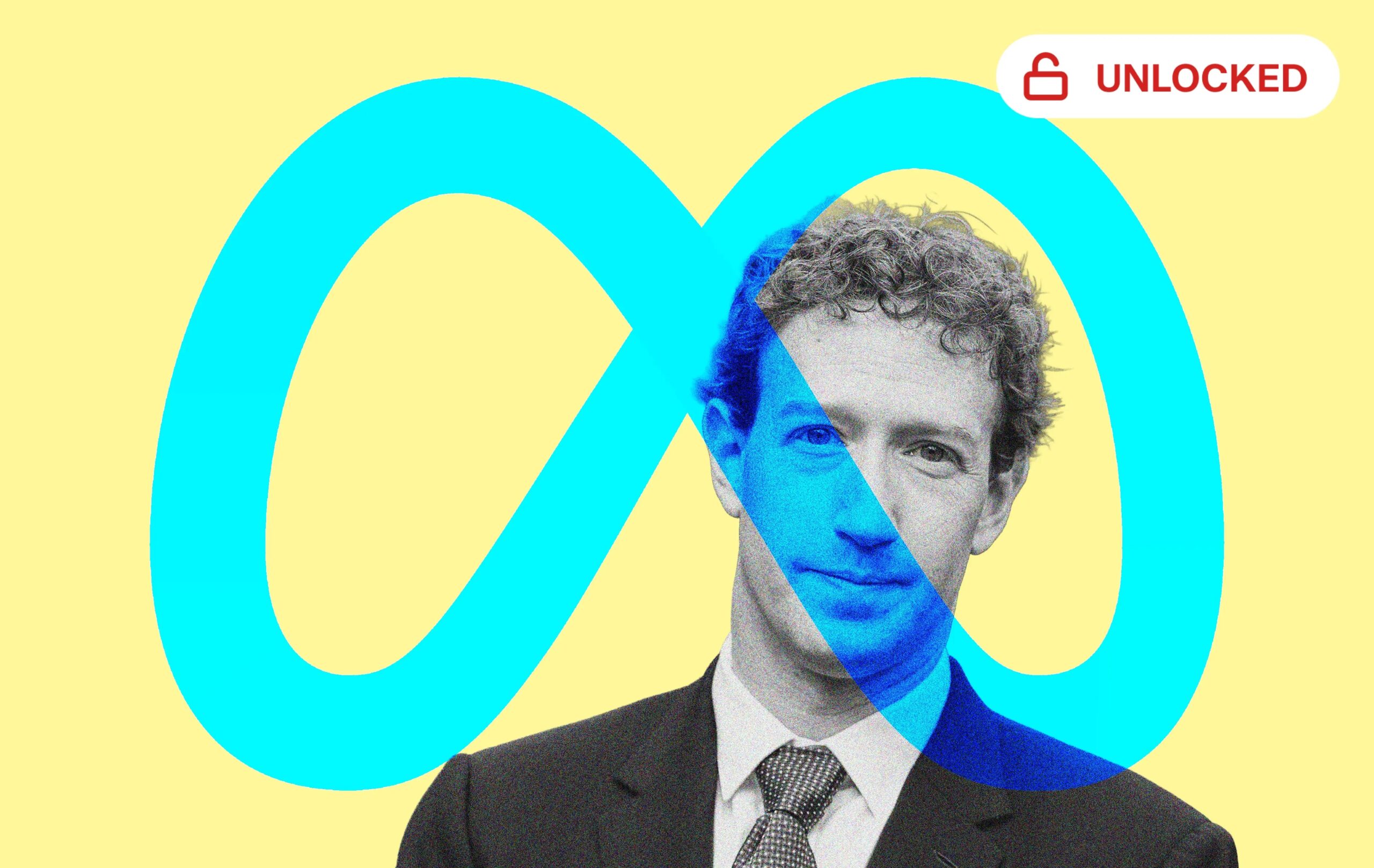
On October 21, Meta unveiled a 2-for-1 stock split, meaning each Meta shareholder would receive an extra share for every one they own. Companies do this regularly, typically to make a high-priced stock seem more approachable. A stock split doesn’t magically double everyone’s wealth (unfortunately): it’s more like turning a single $20 bill into two $10s.
Yet a look at the 109-page filing reveals the split wasn’t primarily about the share price (or acquisitions, as the company claimed), but the culmination of months of bargaining between Mark Zuckerberg and the board over two issues: 1) funding Meta’s AI push, and 2) a California ballot initiative that would levy a wealth tax on billionaire households. The way they resolved these questions could influence Meta’s leadership for years, and it offers insight into the future of taxation in the United States.
What the tax would do.
California’s Proposition 40 would impose a one-time 5 percent levy on the net worth of anyone who was a California resident on January 1, 2026, and who is worth at least $1 billion when the state assesses wealth on December 31, 2026. The tax would affect roughly 200 individuals. If the measure passes—which may take weeks to confirm and is currently trailing in the polls—these 200 billionaires could pay the entire bill in April 2027 or spread it over five years (with interest).
The proposed levy targets ownership rather than income, making it a tricky proposition. Most taxes we encounter tax money that comes in (income tax) or goes out (sales tax); this is a wealth tax, effectively taxing money that is merely sitting idle (akin to a property tax on one’s home). For most of the 200 people on the list, their wealth is tied up in shares of companies they founded. Zuckerberg’s net worth hovers around $240 billion—varying with the day and the index used—and more than 90 percent of his fortune rests in Meta stock.
A 5 percent levy on his $240 billion would be about $12 billion. As the world’s fifth-richest person, he can certainly shoulder such a bill: For comparison, a 5 percent tax on assets worth $100,000 would be around $5,000. It’s a substantial amount, but Zuckerberg would need to unload Meta shares to cover it. That sale could end up costing him more than the $12 billion: it could jeopardize his grip on the company. Zuckerberg has never been content running a firm from which he could be ousted. He has always held effective control and has repeatedly rejected one-share-one-vote proposals. The company’s entire structure seems designed to make him irremovable.
Zuck’s problem.
Meta issues two stock classes—Class A, which anyone can buy and which carries one vote per share; Class B, which carries ten votes per share, most of which Zuckerberg owns. He wields control by holding a small slice of equity (about 13 percent) but a commanding stake of votes (roughly 61 percent) through these super-voting shares.
The weight of votes is heavy: they decide the board and, in turn, the CEO. If you hold the majority of votes, you can’t be fired. Zuckerberg has remained untouchable since Facebook went public, and he intends to keep it that way.
The Meta board has faced a long-standing dilemma. In February, it set up a special committee to determine how to fund the AI expansion. Management had presented three scenarios, each demanding hundreds of billions in funding within months.
The straightforward way to raise that capital would be to issue more stock. But every new voting share dilutes Zuckerberg’s influence, and he signaled to the board that he wouldn’t back an equity dilution that did so. On July 8, per the filing detailing the new share class, Zuckerberg told the committee chair that honoring Prop 40 could compel him to sell enough Class B stock to drop his voting stake to around 53 percent. Still a majority, but just barely; another tax development or a major AI funding round could push him below that threshold.
Weeks later, his lawyers began floating the possibility of relocating out of California. A move wouldn’t erase Prop 40’s reach, since it targets residents as of January 1, 2026. What a relocation would accomplish is avoiding California’s 13.3 percent income tax on the shares he would have to sell to cover Prop 40, and shielding him if the “one-time” tax proves to be ongoing.
In the end, nothing decisive happened. A few months afterward, Zuckerberg announced he would list his Palo Alto residence in four days and reminded everyone that such a listing is a matter of public record. Within days, he and the board reached a deal. The Financial Times noted that the filing described the negotiation as “protracted and at several points, contentious.”
That moment distilled the broader wealth-tax debate: a tax on ownership is painful if you must part with what you own, and for Zuckerberg, selling shares is tantamount to losing control. Something within the framework has to bend to create some sense of fairness, yet the complexity of this taxation becomes evident in real time.
The U.S. tax system relies on taxing income. The greatest fortunes today aren’t tied to earnings; Zuckerberg pays himself a nominal $1 salary and borrows against his holdings to fund his lifestyle, and when he dies, his heirs will inherit the shares, so capital gains are never taxed. His $240 billion has never been taxed because he has never sold, and under current rules, the tax obligation can vanish even after death.
Tax scholars refer to this as “buy, borrow, die.” Berkeley economists estimate that the wealthiest 400 Americans paid an average tax rate of 24 percent from 2018 to 2020, far below the 30 percent paid by most others. So some alteration is necessary if the tax code is to reach the nation’s richest. Prop 40 embodies one possible answer—and it could unintentionally reshape how the largest corporations operate.
The deal.
In response, the board devised a third variety of stock. Class C shares carry the same economic rights as Class A—tracking the company’s price and collecting dividends—but carry no voting power. In effect, all the capital without any say in the business’s direction. Every shareholder would receive one Class C share for each Class A or Class B share they hold, creating the “split.” The newly issued shares would begin trading on January 19, 2027.
Zuckerberg would be allowed to immediately liquidate 20 percent of his fresh Class C shares—roughly 10 percent of his total economic stake—“for any reason, including to cover his potential Prop 40 liability.” The remaining 80 percent would stay tethered to his voting stock, gradually becoming available over eight years, and he agreed to remain a California resident, or a resident of Meta’s headquarters’ location, for eight years unless “material unforeseen circumstances” intervened.
Zuckerberg’s $1 salary would mean that, if Prop 40 passes and he pays up, he would be effectively paying to run as the Company’s CEO while remaining in California. The committee deemed it “critically important” to have him nearby Menlo Park and the AI lab, citing the challenges of managing the company remotely during the pandemic. He spent a significant portion of 2020 on Kauai, where he is known for tending cows and enjoying macadamia nuts and beer.
At first, he asked for a 20-to-1 Class C dividend, rather than 1-to-1, plus an equity package comparable to what other founders had recently secured. He later withdrew that demand.
What everyone else gets.
So why is this relevant to you? Once a nonvoting class exists, the company can issue more of them. There are hundreds of billions of dollars to raise. On October 26, five days after the plan was announced, Meta revealed a financing package worth about $98 billion. It would issue $22.5 billion of Class A stock, $12.5 billion of preferred shares that would convert into Class C, and a $60 billion program to place Class C stock onto the open market starting next quarter. The final element is an at-the-market program, meaning Meta can liquidate small tranches at its discretion. Chipmakers Nvidia, AMD, and Broadcom signaled interest in buying up to $5 billion, per Bloomberg.
So Meta buys components, those firms purchase Meta stock, and Meta uses the proceeds to buy more components. It’s circular financing, in its own way.
And Meta does need the cash. On the same day the new stock plan was released, it posted $64.6 billion in revenue, up 26 percent. Running Meta costs a lot—the payroll, legal work, etc.—and after covering those costs, the company produced roughly $32.8 billion in cash. Then it spent $34.9 billion on data centers and hardware in a single quarter. Spending more than it brings in means negative free cash flow, which Meta has experienced for the first time in years. Interestingly, it also didn’t buy back any stock; a year earlier it spent $3.3 billion on buybacks, a sign of excess cash. Now it is selling stock instead, signaling a shift. Meta projects up to $145 billion in expenditures this year, and its longer-term commitments for data-center leases and computing power now total about $825 billion.
Why issue stock rather than borrow? Because debt on that scale would threaten the firm’s credit ratings. The market has started punishing companies like Oracle and CoreWeave for attempting such moves—credit risk is hitting all-time highs. The same story applies to Meta. The day after the plan was announced, the cost of insuring its own debt hit a record high. Meta also noted that the new share class would enable cooperation with sovereign wealth funds. Yet despite efforts to avoid penalties, Meta’s stock dropped about 6 percent the day after the split and the share-class announcement.
So if you own Meta, your new Class C shares aren’t “free Zuckerbucks” but are instead instruments that could be diluted by an initial $60 billion in new issuance, and buyers of those shares will not obtain any vote over future expenditures.
This has happened before, and it’s always controversial.
Nonvoting shares typically fetch a price just below voting ones because voting rights are more valuable. Google’s 2014 move is a notable example. The company promised to compensate for the gap if the difference widened too much, and it did. It paid Class C shareholders $522 million a year later because the nonvoting shares traded at a discount. Whenever a corporation has tried this, three patterns tend to appear:
- The nonvoting shares trade at a discount
- Somebody sues
- A court weighs whether the board was strong enough to bargain
Facebook itself attempted this in 2016 and abandoned it in 2017, just days before Zuckerberg was to testify in a lawsuit brought by minority shareholders. Bloomberg notes that Facebook’s market capitalization was then about $500 billion; today Meta stands at roughly $1.8 trillion.
This episode is particularly noteworthy: On October 16, a Delaware judge blocked a similar move at Cloudflare, but that dispute centered on whether the board committee was too cowed by its founder to negotiate in good faith. Meta’s board approved its plan on October 19, mere days later. On October 27, a union pension fund sued to block Meta’s plan ahead of January, arguing the committee lacked independence (DoorDash CEO Tony Xu sits on the committee and has funded anti‑wealth tax campaigns) and that the terms were unfair. The lawsuit quoted Bloomberg reporting:
“Zuckerberg has always been fixated with his control over Meta. Time and time again, he has squeezed and bent Meta’s capital structure to increase his grip and perpetuate his control. Zuckerberg’s latest gambit is his most aggressive attempt yet, while also using the company as his own piggybank to fund his anticipated tax bill.”
Meta says the plan benefits all shareholders, but does it truly?
Did the wealth tax proposal work or fail?
Both sides lauded the Meta arrangement as a victory, which says a lot. Representative Ro Khanna argued it showed billionaires don’t necessarily leave over taxes; Zuckerberg stayed because the company paid to retain him, whereas Google founders Brin and Page departed. Brin contributed well over $100 million to oppose the measure. The tax threat pushed others to relocate and they continue spending to defeat it.
There was disagreement over how much revenue the tax might raise. Proponents like Emmanuel Saez put the figure near $100 billion. Two Hoover Institution economists, Ben Jaros and Joshua Rauh, estimate it would bring in about $30 billion but cost the state a net $39 billion once departing billionaires stop paying income tax—an update to Marian Tupy’s August analysis that put the loss at $25 billion. The number worsens as more billionaires leave (six have left, removing about 30 percent of the base). This is why the issue is so divisive and perplexing. Other states are exploring wealth taxes too—Washington recently enacted a 9.9 percent rate on income above $1 million, and several others are examining similar measures. They will likely confront the same hurdle: a tax on assets whose true value is not fixed, so power dynamics tend to prevail.
Final thoughts.
So, two possible outcomes emerge here:
- The tax passes: Zuckerberg would pay cash from assets that cost him little to nothing to hold. It’s a peculiar triumph for a measure aimed at making the ultra-rich feel it, yet it would raise some funds.
- The tax fails: Zuckerberg would owe nothing. The new share class, the eight-year arrangement, and the $60 billion of nonvoting stock planned for issuance would outlive the ballot measure that inspired them.
The vote was about taxing 200 people, but the response permanently rearranged one of the nation’s largest companies. There is always some method to adapt to a tax, but this isn’t a new pattern. The New York Stock Exchange barred nonvoting stock in 1926 after the Dodge brothers did exactly this; the 1980s later permitted it again. Europe’s experiments with wealth taxes largely failed because the revenue tended to flee. The recurring takeaway is simple: the wealthy often rearrange themselves when pressed.
Markets FTW
Guess which consumer stock led performance in October. It’s a toy company: Hasbro posted $1.6 billion in third-quarter revenue, up 15 percent year over year, driven in part by one of my favorite games: Magic: The Gathering. This trading-card title debuted in 1993 and has surged 34 percent year over year to $616 million in revenue. That means a card game accounts for nearly 40 percent of Hasbro’s revenue, alongside enduring brands like Play-Doh, Nerf, Monopoly, and Transformers. The toy division grew 4 percent, and Hasbro raised its full-year outlook. This underlines a clear divide: toys for kids are up 4 percent, while toys for adults are up 34 percent. A lot to unpack there.
Chart of the Week
People are leaving their jobs again. Heather Long shared this chart showing nearly 3.4 million Americans quit in September—the highest since 2025. The quits rate rose to 2.1 percent from 1.9 percent.
Quitting is one of the primary indicators of confidence in the labor market: people don’t resign unless they believe they can quickly find another job. So when the quits rate trends downward, as it has since 2022, it signals growing concern about the labor market.
Austan Goolsbee, president of the Chicago Federal Reserve, has described this as a “low-fire, low-hire” labor market: no widespread layoffs, no rapid hiring, and overall stagnation. September marks the first noticeable movement in a while: job openings increased, layoffs declined, and voluntary departures rose. It’s a hopeful sign for a labor market that has faced headwinds.
What I’m Watching
- November 6: October jobs report
- November 10: October CPI
- November 18: Minutes from the Fed’s October meeting
- December 8-9: The Fed’s last meeting of the year
- December 31: Prop 40’s valuation date, if it makes it
- January 19, 2027: Meta’s Class C shares start trading on the Nasdaq
Disclaimer: The opinions expressed above do not necessarily reflect those of the presenting sponsor.