
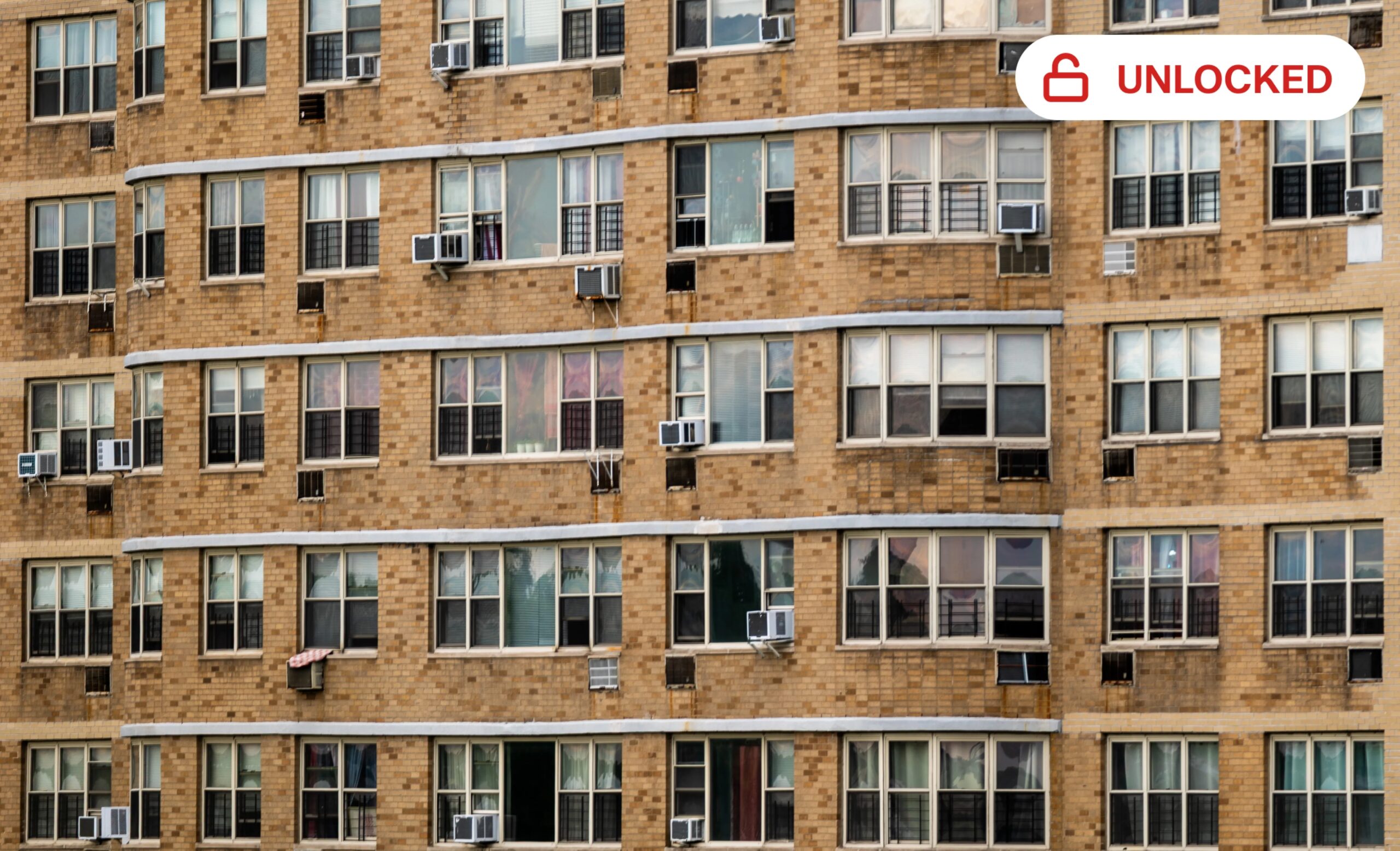
This June, New York City’s Rent Guidelines Board approved a 7-1 vote to suspend rent increases on 960,000 rent-stabilized apartments, fulfilling Mayor Zohran Mamdani’s central campaign pledge to “freeze the rent.” The lone dissent came from Arpit Gupta, an associate finance professor at New York University, who argued that with landlords’ operating costs continuing to rise, a freeze would merely lead to the decline of rent-stabilized units and push rents higher for units not under rent stabilization.
“In the absence of evidence that our operating costs have declined, or policy steps that would point in that direction, it’s hard for me to vote for a freeze,” Gupta told The Dispatch last week.
Rent-stabilized units constitute more than 40 percent of the city’s rental stock and are subject to annual caps on rent increases set by the Rent Guidelines Board. The freeze covers both one-year and two-year leases renewed from October 1, 2026, to September 30, 2027.
Economists have long questioned rent control’s logic, grounded in standard economic theory that views it as a price ceiling that curtails housing supply and creates market inefficiencies. In a 2012 poll of 41 leading economists, only one agreed with the claim that local ordinances limiting rent increases on some units “have had a positive impact over the past three decades on the amount and quality of broadly affordable rental housing,” while 33 disagreed or strongly disagreed.
Mamdani’s proposal for a rent freeze resonated with voters during the campaign, but the question of how rent control truly affects tenants in stabilized dwellings and those in the market-rate sector merits fresh examination.
How Market-Rate Rents Are Calculated
Economists view prevailing rents as a balance of supply and demand: rising demand to reside in a particular area tends to push rents upward, while increasing the supply of housing exerts downward pressure.
On the supply side, the pace of new housing construction in a given locale closely influences rental costs. A 2019 study by Evan Mast, who is now an assistant economics professor at Notre Dame, found that adding market-rate housing can reduce rental prices across affordability levels, even when the new units themselves carry higher price tags. This occurs through a process called a migration chain, whereby tenants moving into new units free up vacancies in their old unit type, driving down rents there and prompting another round of moves as tenants seek upgrades. Analyzing 12 large U.S. cities, Mast concluded that constructing 100 market-rate units freed up the equivalent of 40 units in the city’s poorest neighborhoods.
Housing supply is also shaped by whether rent revenue allows landlords to cover operating costs, such as upkeep, property taxes, mortgage payments, and energy bills. That is why New York’s Rent Guidelines Board must take into account these operating costs when deciding rent increase limits for rent-stabilized units.
On the demand side, factors like local income levels, population growth, and neighborhood desirability shape how much renters are willing to pay. Rents tend to be higher in places where a larger share of households can afford and are prepared to pay more, and the physical attributes of a unit—its size, condition, layout, and amenities—also influence what tenants will accept price-wise.
Beyond the narrow lens of supply and demand, rents can vary with how long a tenant has occupied a unit. Landlords may offer modest discounts to keep reliable tenants and avoid the turnover costs, meaning rents for existing tenants can adjust more slowly than those for newly leased units.
When landlords set a final monthly rent, they often use nearby comparable apartments as a yardstick for what the market will bear.
One key signal of whether landlords are charging rents that a competitive market would sustain is the level of vacancies in a given area. “If we observe in a market like New York that vacancy rates for both all units and market-rate units are quite low, that indicates landlords aren’t making a mistake in that sense,” Gupta noted. “Because at the rents they’re charging, inventory remains tight.”
The Effects of Rent Control
Advocates of rent control often emphasize its role in creating affordable housing for the city’s poorest residents and shielding tenants from steep rent hikes that could force relocations.
Yet, most rent-control programs are not purely redistributive. For example, San Francisco’s rent-control rules apply only to buildings erected before June 13, 1979, with no income limits for occupants. New York City similarly extends rent stabilization to buildings with at least six units built between 1947 and 1973, and also maintains a separate, more tenant-friendly rent-control regime for structures built before 1947. A Wall Street Journal analysis found that the city’s top 25 percent earners received a larger discount on rent-stabilized units relative to market prices than any other income quartile.
Having tenants locked into below-market-rate units that they are unlikely to leave provides landlords with little incentive to maintain properties, allowing the quality and quantity of rent-stabilized housing to deteriorate over time.
A 2019 study by economists Rebecca Diamond, Tim McQuade, and Franklin Qian used a 1994 amendment expanding rent control to smaller multifamily buildings in San Francisco to examine how otherwise similar properties ended up differently depending on whether they were under rent control. The city’s 1979 law generally permits rent increases up to 60 percent of the consumer price index, a standard inflation measure. The researchers found that landlords of newly controlled multifamily buildings reduced their housing supply by 15 percent, contributing to an overall 25 percent decrease in the number of tenants living in rent-controlled units compared with 1994 levels.
Confronted with the choice of preserving buildings whose costs exceed potential rent revenue or withdrawing units entirely from the controlled market, some landlords opt for the latter.
“When prices rise within the controlled housing stock, which still constitutes the vast majority of multifamily housing in San Francisco, controlled landlords respond by effectively trimming their housing supply,” said Brian Asquith, an economist at the W.E. Upjohn Institute for Employment Research who studied landlords’ responses to San Francisco’s rent control, in The Dispatch. “That exact supply reduction is the outcome you don’t want in the face of rising demand.”
Gupta argued that a rent increase pause in New York City would have been more defensible if landlords’ true operating costs had actually fallen, as they did at times during Mayor Bill de Blasio’s tenure (2014–2021), when the Rent Guidelines Board approved three rent freezes. “If the true costs of running a building are indeed dropping, I would be happy to vote for a freeze because our mandate is to tie rent growth to operating conditions in some way,” Gupta said.
Nevertheless, data released by the Rent Guidelines Board in March show that the price index for operating costs of New York City buildings with rent-stabilized units rose by 5.7 percent between 2023 and 2024.
The scarcity created by rent control might also be worsened by negative spillovers into new housing development. California law requires landlords who remove properties from the rent-controlled market to keep those units vacant for at least five years before offering them at market rate, even if they are demolished and rebuilt. As of 2024, San Francisco County’s median home dated back to 1948, ranking it as the third-oldest among the 100 largest counties in the United States. “Given the city’s high cost and the number of people eager to reside there, you’d expect a lot more redevelopment if not for this heavy regulatory hurdle,” Asquith said.
While zoning rules have been a major factor in housing shortages, the entrenched incentive to retain rent-controlled stock may not have helped. With rental housing shortages nationwide, market-rate rents in the country’s largest metro areas have risen in response. “The city’s housing market is effectively breathing with only one lung,” Gupta wrote in a City Journal article explaining his vote against the rent freeze. “That pressure pushes up market-rate rents. Politicians often point to outrageously high-listed rental prices that are well above what most people actually pay in the city. This mismatch stems from a two-tier housing system that favors insiders while forcing outsiders to pay steep rents.”