
Welcome to Dispatch Energy! For weeks, diplomacy aimed at prolonging the Iran ceasefire and reopening the Strait of Hormuz has stalled, as Iran signals it could pull out of negotiations in reaction to the newest clashes between Israel and Hezbollah, Tehran’s Lebanese ally. Even if Washington and Tehran manage to strike a fresh memorandum of understanding to pause the fighting, a complete restoration of energy flows through the strait may still require months or longer.
Whether the strait reopens next week, next month, or next year, it remains instructive to map out the long, arduous process of unwinding the energy shock caused by the Iran conflict. Let’s dive in.
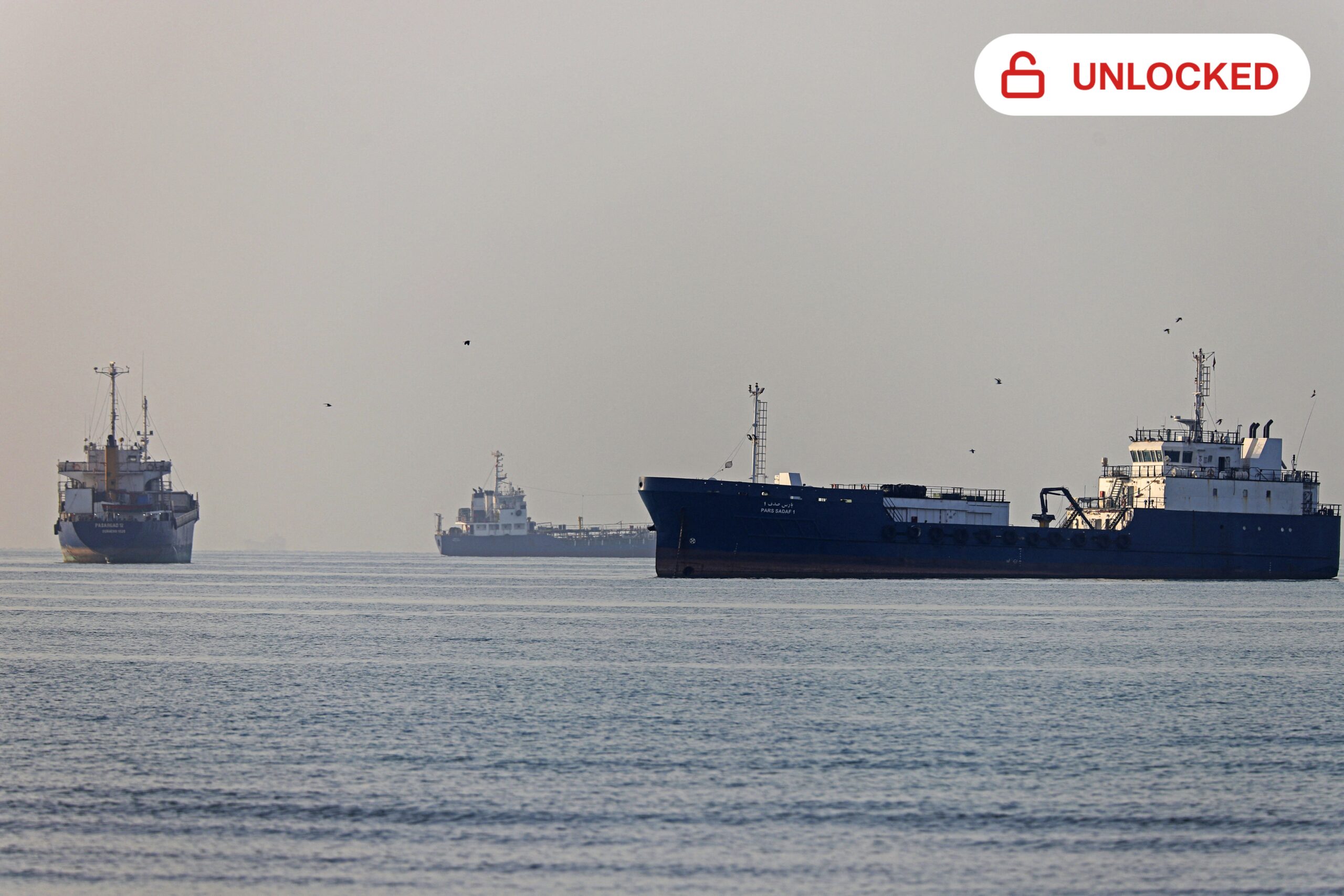
To begin, note that the initial vessels exiting the Strait of Hormuz will carry what amounts to a stockpile—not new inflows of oil. Fewer than half of the roughly 2,000 restricted ships are the large merchant vessels such as tankers, bulk carriers, or containers. Only about 200 of those are tankers, a drop from roughly 250 at the height of the initial stranding, according to tanker-tracking data from market data provider Kpler. These roughly 200 tankers are holding an estimated 160 million barrels of stockpiled crude. These barrels—when moved out of the strait—are often mistaken for “offsets” to the supply crunch. Instead, they should be viewed as a stockpile: oil that has been produced but not yet delivered to markets.
The initial outward flow from Hormuz will essentially relocate one stock of crude from the Gulf into the wider market. While this certainly offers some immediate relief, it resembles a release from one of the many strategic petroleum reserves rather than a normal replenishment of flows. At the same time, the fundamental flow problem persists because 13 to 15 million barrels per day of Middle Eastern production capacity has been forcibly shut in by the strait’s closure, and that production cannot restart until export capacity is restored.
We also need to weigh timing and scale. Iran has promised to help restore shipping to prewar levels within 30 days after the MOU’s signature. Depending on the source (for example, S&P Global or Lloyd’s List), this target refers to the roughly 150 large merchant ships that transited the strait each day before the war opened on February 28. But this figure includes not just tankers but also bulk carriers carrying metals, food, and fertilizer. Ultimately, the speed at which stranded vessels clear the Gulf will depend entirely on the daily volume Tehran allows to pass the strait, and that volume will depend on the final MOU signed by both sides.
Complicating matters further is that current shipping levels are not independently verified, which could make monitoring MOU compliance on this point difficult. Iran has been reporting unusually high transit numbers through state and social media, claiming earlier this month that 30 to 40 ships were crossing the strait each day. However, tanker tracking presents a different picture: fewer than 10 daily transits, and on some days as few as two. The simplest explanation is that the IRGC is counting smaller vessels, which do not meaningfully impact commercial disruption. This may be an effort to project “responsible management” of the strait, but there is a worry that these inflated figures could be used to claim compliance if the strait reopens under a deal.
And it’s not just Iran that is vague about vessel counts. The U.S. has asserted that it has “guided” 70 ships across the strait over the past three weeks, largely with their automatic identification system transponders deactivated. This is a plausible figure, but again, that’s only three to four ships per day through a route that previously saw 130 to 150 daily transits. More importantly, it remains unclear what this “guidance” consisted of and, crucially, these “dark transits” have not been independently verified to date.
In any case, caution will be essential in the early days of reopening. While there has not yet been any confirmed detonation of a sea mine by a tanker, the initial phase of any reopening would involve weeks of escorted and tightly monitored transits to establish safe channels for entry and exit. Minesweeping is a demanding and time-consuming process; a Pentagon briefing to Congress estimated it could take up to six months to fully clear the strait of mines. And demining will not commence until the war is verifiably ended and ships can operate without the threat of Iranian missiles and drones.
Rebuilding routes.
As the strait drains, the next step is for tankers to re-enter the waterway. The only way to begin restoring the vast volume of oil and natural gas liquids (e.g., propane) production that remains shut in across the Middle East is to rebuild export capacity. New, empty tankers must pick up the stranded crude and enable companies to restart wells that have been shut in.
Unfortunately, it will take weeks, if not months, to resume a prewar level of inbound Gulf traffic. First, outbound ships that have been trapped for months will rush to leave, while inbound ships will understandably hesitate to re-enter the waterway. This hesitation will be especially pronounced in the initial days as the durability of any ceasefire agreement is tested. Even after that, the constant threat of renewed hostilities will linger as the two sides negotiate the nuclear file.
There are also purely logistical concerns. Outbound ships will spend weeks or months delivering their cargoes before returning to the region to refuel. These vessels will likely require new crews in many cases and may face further delays for maintenance after months of irregular use. The stranded ships have reportedly developed thick barnacle growths, reducing speed and fuel efficiency and even risking damage to propellers or steering. Barnacles are a chronic issue for ships, but the long idle period in very warm water has intensified the problem. Some of this work will be necessary before the ships can safely depart the Gulf, and additional non-emergency maintenance will be needed before they can return to normal service.
Meanwhile, inbound ships have been redirected en masse. Many vessels that previously served the Middle East–to–Asia route have shifted to support the surge of exports from the U.S. Gulf Coast, which places them far from ideal positions should Hormuz reopen tomorrow. Returning them to their original routes will take weeks, and only after owners and insurers decide it is safe to resume service.
Resuming production.
Bringing upstream production back online is the only truly meaningful offset to the yawning gap in the global supply balance. Over the past three months, 12 to 14 percent of global oil output has been lost, and the cumulative unproduced Middle Eastern oil already exceeds 1 billion barrels versus what was anticipated for this year. If restoration began next week, unproduced oil could be around 1.5 billion barrels given the inevitable delays in restarting operations.
And no one can predict how long that restart will take. This is an extraordinary event, given both the speed of shutdowns and the scale of reopening. In the best-case scenario, it will take weeks to months to bring wells back online. The exact timeline will differ by country and by the depth of production cuts. Saudi Arabia has diverted some exports via the East–West Pipeline to the Red Sea, limiting its loss to roughly 30 percent. By contrast, Iraq and Kuwait have endured deeper cuts; the Kuwait Petroleum Corporation’s CEO warned in March that even if the war ended immediately, it would take three to four months to regain prewar production levels.
Meanwhile, although there is broad expectation that shut-in production can be ramped back to prewar levels, the extent of damage to upstream facilities remains uncertain. One example: Iran struck Qatar’s Ras Laffan LNG export facility in mid-March, an action that QatarEnergy’s CEO described as resulting in a reduced export capacity of 17 percent for up to five years. Even a 5 percent loss of overall prewar volumes would imply a substantial long-term hit of 650,000 barrels per day to global oil supply.
But the greatest threat to durability lies downstream, in refineries and petrochemical plants. These facilities were Iran’s preferred targets in the war’s early weeks, and most Gulf states closely guard information about the extent of damage. Significant, lasting harm to these sites could curb immediate postwar supplies of scarce jet fuel and diesel even if crude flows are restored.
Looking ahead.
There is no going back to “normal.” The Strait of Hormuz had never before been closed, and this unprecedented disruption makes it likelier that it could close again in the coming years. This represents a monumental shift in risk for the world’s most critical oil supply artery.
All of this means inventories will be pivotal going forward. First, nations worldwide will need to replenish reserves after the large wartime releases. Second, the postwar era will feature increased inventories—both strategic and commercial. It has become clear through this crisis that underinvestments in strategic stockpiles, such as in India, left countries more exposed to the Hormuz shock, and they are now working to expand those reserves.
Inertia is the largest obstacle at this stage, with neither Iran nor the United States appearing ready to concede ground and reach an agreement. Each additional week that this crisis drags on imposes further strain on the oil market: dwindling stocks, rising scarcity, and higher prices aimed at curbing demand. If the U.S. president chooses to strike a deal only when market pain has grown acute, that foundational pressure could persist for months—even after Washington and Tehran finally sign an accord.
Thus far the oil market has shown unusual forbearance in the face of the largest supply shock in the industry’s history, but such patience cannot last indefinitely. Commercial stocks and other buffers are draining at record rates, and prices will eventually need to rise to ration constrained supplies.
Policy Watch
- Canadian pipeline company South Bow, which owns the legacy Keystone pipeline connecting Hardisty, Alberta, to the U.S. Midwest en route to the Gulf Coast, is looking to build the Prairie Connector pipeline. The new project would repurpose constructed but never operationalized pipeline segments that were initially intended to serve as the Canadian portion of the Keystone XL pipeline, which was canceled by President Joe Biden in 2021. This route would connect to the U.S.-based and expanded Bridger Pipeline, which would ship barrels south into Wyoming. But South Bow’s CEO noted last week that the project faces obvious “sovereign risk,” highlighting the starkly hot-and-cold disposition of the White House toward the infrastructure. While it’s a promising sign of the current political mood that the companies involved are taking the leap, all eyes will be on whether the project can clear the required permitting hoops before the next U.S. presidential election potentially recomplicates the effort.
Further Reading
- The discussion above largely assumes that whatever deal the U.S. and Iran agree on will see the Strait of Hormuz return to something like its prewar status. Another analysis, by industry data provider Kpler, argues that a situation in which Iran retains control of the strait could see longer-term transits of all goods capped at below 50 percent of prewar levels. There’s a scenario in which this is a tolerable—albeit still tight—reality for crude thanks to successful and growing rerouting efforts from Saudi Arabia and the United Arab Emirates. However, it wouldn’t be a tolerable outcome for most other commodities markets, from liquefied natural gas to fertilizer, that don’t benefit from similar offsets.