
Want to continue to receive our Dispatch Markets newsletter in your inbox every week? Sign up here.
Welcome back to Dispatch Markets! The incoming Fed chair has been unusually explicit about wanting a leaner central bank, but the inner workings of the financial system might prevent him from achieving that goal.
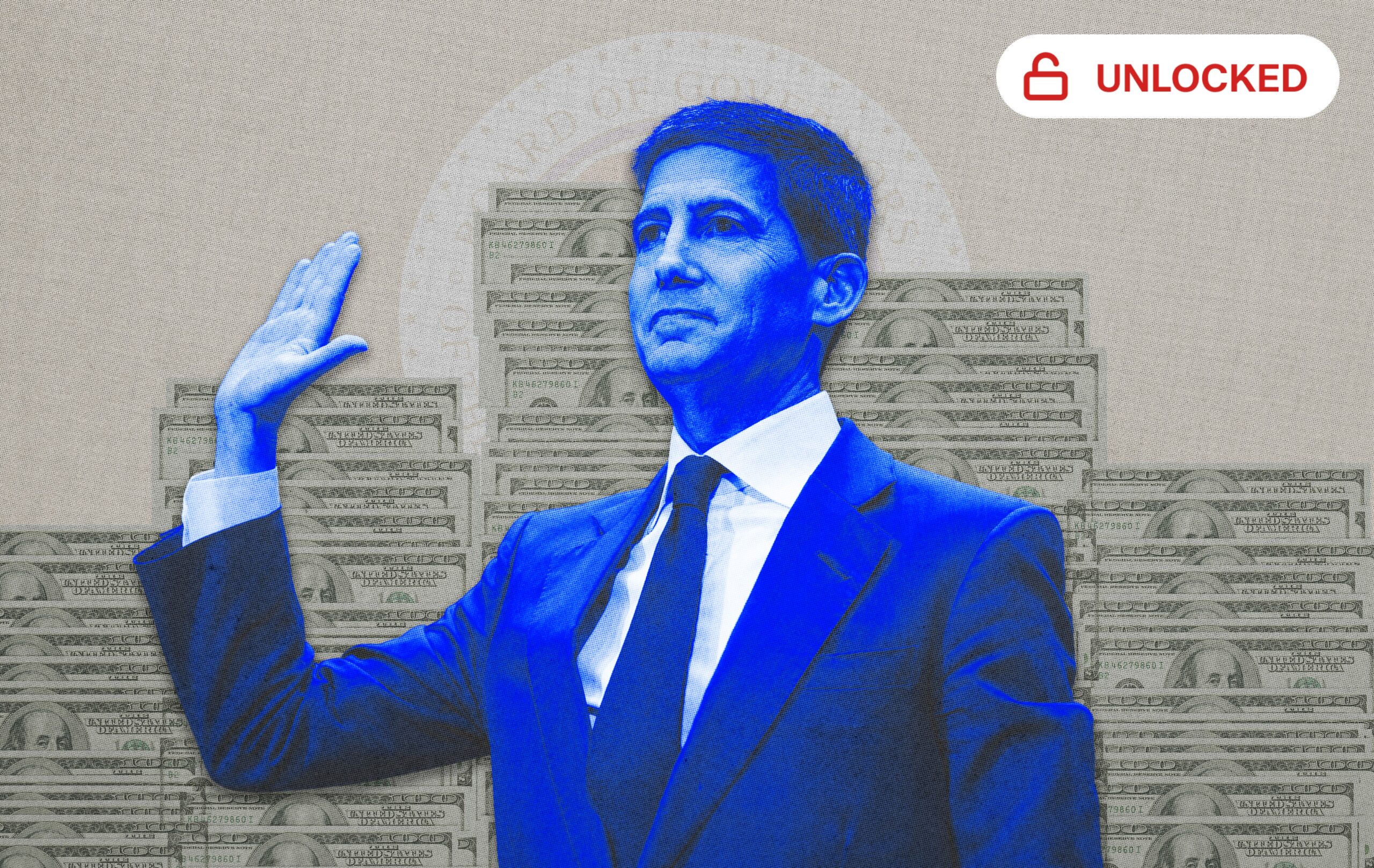
Kevin Warsh aims for a leaner Federal Reserve. He has pressed this agenda for more than a decade, tracing it back to his 2011 departure from the Fed’s Board of Governors, through opinion pieces, speeches, and his confirmation hearing on April 21, where he told the Senate Banking Committee that the Fed’s $6.7 trillion in assets had “done quite a bit of harm” to the institution’s credibility.
If the full Senate confirms him in time to succeed Jerome Powell on May 15, reshaping the balance sheet could become the defining policy choice of his tenure.
He’s made missteps before. In 2010, amid unemployment near 10 percent, Warsh’s preference for a smaller central bank argued for inaction and forcing Congress to act. It produced some incoherence, as Wall Street Journal reporter Nick Timiraos noted, because in the same year Warsh voted for quantitative easing and days later published an op-ed questioning the move.
Yet there have been moments when his instincts aligned with later outcomes. In June 2021, during a period when the Fed still treated inflation as transitory (a term Chair Powell would later discard), Warsh wrote in the Wall Street Journal that the central bank should “stop purchasing mortgage securities immediately” and “slow its Treasury purchases” before inflation took hold.
Warsh has shown a hawkish bent in all climates. The question is whether the present moment is one his worldview was built for, or if he’s at risk of misreading it once again. He is stepping into a role that former Fed Chair William McChesney Martin Jr. once described as removing the “punch bowl just as the party gets going.”
The challenge for Warsh is that investors’ demand for cheap credit and rising asset prices can prompt even prudent actors to invest more. If the economy can generate enough growth to meet that extra demand, prices may remain stable; if not—perhaps due to supply-chain frictions or a tight labor market—inflation could reappear. Prolonged support in a constrained economy can feed inflation, a dynamic that helped drive the surge in 2021.
The Fed pays for these bonds with newly created reserves—electronic credits deposited into banks’ accounts at the Fed. When the Fed buys Treasuries, it does so on the open market, not directly from the U.S. Treasury (a prohibition in the Federal Reserve Act). It purchases from a small cadre of large banks and broker-dealers known as primary dealers, and settles by crediting their Fed accounts with reserves, injecting money into the banking system.
Quantitative tightening (QT), the process of shrinking the balance sheet, flips the mechanism. In 2022, the Fed stopped reinvesting proceeds from maturing bonds rather than selling them outright. This decision allowed its holdings to retreat by more than $2 trillion over the next three and a half years, from a peak around $8.9 trillion.
When a Treasury bond matures, the U.S. Treasury repays the Fed by issuing a new bond, which a bank or investor purchases using its reserves. Those reserves leave the banking system, flow to the Treasury, and eventually return to the Fed, where they are extinguished.
But those reserves matter, and pulling back typically has a significant impact. Banks settle most of their daily trades by transferring reserves among their Fed accounts. If reserves run thin, banks tend to hoard cash and charge each other higher overnight rates in the repo market—the short-term plumbing that keeps the financial system moving.
We observed this dynamic last autumn. By October, bank reserves had declined enough that institutions struggled to settle daily transactions, prompting them to lean on the Fed’s overnight lending backstop and to borrow record amounts on Halloween and again on New Year’s Eve. Those episodes signaled to the Fed that the plumbing was under stress.
Consequently, the Fed paused its balance-sheet reduction. In December it officially halted QT and redirected the maturing mortgage proceeds into short-term Treasury bills. But ending QT was more like closing the valve than solving the underlying need for replenishment.
Weeks later, the Fed resumed purchases of short-term Treasuries to maintain cash flow in the banking system. It dubbed this program “Reserve Management Purchases” to emphasize that this was not the crisis-era bond-buying, but rather a measured effort to ensure liquidity in the pipes.
Thus, if Warsh assumes the helm, he inherits a Fed that has just learned it had undershot its liquidity, paused, and then re-entered the market. The punch bowl, for the moment, remains appealing.
What Warsh has actually said.
During his April hearing, Warsh leaned on the idea of coordination, indicating he would work with the Treasury on the unwind and that any reductions would occur “slowly and deliberately.” When Sen. Chris Van Hollen pressed him on whether aggressive rate cuts might fuel inflation, Warsh redirected attention to the balance sheet: “The Fed has two crucial monetary policy tools. One is the policy rate, the other is the balance sheet. Those tools should operate in concert, not at cross-purposes.”
Warsh contends that the balance sheet, in its current oversized form, props up asset prices and concentrates the benefits of policy among current asset holders. Reducing it would remove that hidden support and create room to lower interest rates—the instrument he sees as more equitable because it reaches deeper into the economy, not just those who own assets.
In a Hoover Institution interview last May, titled “Inflation is a Choice,” he framed the substitution logic more bluntly: “If the money-printing mists could be quieted, we could push for lower interest rates because all this liquidity is flooding the system and pushing inflation above target.” Shrinking the balance sheet would lessen the support for asset markets and free space to cut rates without overheating the broader economy.
He has also signaled support for a new “Treasury-Fed Accord,” a public pact between the Fed chair and the Treasury secretary regarding the makeup of the Fed’s holdings. He frames this as a restoration of Fed independence. Powell-era officials would likely term it a compromise of independence by giving the Treasury a formal say in monetary policy. That institutional clash could define Warsh’s first year more than any precise balance-sheet figure.
Two pieces of the picture are still missing. First, a timetable. Second, a commitment to the only mechanism capable of meaningfully shrinking the balance sheet within his term—selling bonds into the market rather than simply waiting for them to mature.
How to shrink a balance sheet.
Mechanically, Warsh has two genuine pathways to reducing the holdings, each with its own limits.
Option one: wait for the bonds to mature. Bonds mature over time; when they do, the borrower repays the Fed, and if the Fed chooses not to reinvest, the pile diminishes. This is the conventional approach. The hitch is speed—especially with mortgage-backed securities. As of late April, the Fed held about $1.99 trillion in mortgage paper, down from $2.7 trillion when the shrinking began in mid-2022. The runoff has been slow because most mortgages backing these securities carry rates so low that refinancing is rarely appealing.
Mortgage-backed securities do not simply vanish on a fixed date. They shrink as homeowners pay down their loans or refinance into new terms. With 30-year mortgage rates hovering well above 6 percent for much of the past few years, refinancing activity has been muted. Homeowners who locked in 3 percent loans in 2020–2021 are hesitant to relocate, since moving would mean sacrificing the favorable loan. The Fed’s MBS portfolio declines as housing market churn occurs, but the churn has been modest.
Waiting for bonds to expire eventually reduces the balance sheet, but the timeline is measured in years, not in a four-year term.
Option two: sell. This would actually move the needle on mortgage holdings within a few years. Selling mortgage-backed securities into the market would lift mortgage rates for new buyers, a painful turn for a housing market already under strain.
A 2024 Kansas City Fed paper, Monetary Policy and the Mortgage Market, noted that during the 2020–21 easing cycle, the Fed’s share of mortgage purchases narrowed mortgage spreads by roughly 40 basis points. Reversing that by selling instead of buying could widen spreads in the opposite direction. The exact effect is uncertain.
But the political reality is clear. In January, former President Trump urged Fannie Mae and Freddie Mac to buy $200 billion of mortgage-backed securities to push rates lower. With the administration already pursuing a parallel intervention, Warsh entering the market and selling would be a direct rebuke and would likely provoke a negative reception.
The other constraint.
There is a third issue to consider.
The Fed needs banks to keep a certain amount of cash parked with it. Banks rely on that cash to settle trades each night. When cash is plentiful, settlements flow smoothly; when it’s tight, institutions tend to hoard it, driving up the cost of lending to one another. This is the reserve dynamic that underpins liquidity in the system.
The Halloween episode last year showed roughly where the line lies. Bank reserves drifted down toward about $2.8 trillion, a level at which the repo market began to falter—a situation J.P. Morgan Asset Management has described as prompting the Fed to pause QT and rebuild reserves to maintain stability.
The repo market—where large banks borrow cash overnight to fund their operations—acts as a barometer for liquidity. When banks short on reserves, they stop lending in repo, driving up overnight rates and triggering broader stress.
The Fed’s mortgage holdings remain near $2 trillion, while bank reserves sit around $3 trillion. If Warsh intends to shrink the mortgage book without draining the systemic cash pool at the same time, the Fed must take steps to keep liquidity circulating—perhaps by using the proceeds from mortgage sales to purchase short-term Treasuries, thereby preserving cash flow rather than pulling it out.
Powell’s Fed has been shifting toward a passive swap: the total size of the balance sheet remains largely unchanged, but the mix shifts toward fewer mortgage-backed securities and more Treasuries. Warsh’s envisioned reform would likely resemble a swap rather than a straightforward shrinkage, recalibrating the composition to preserve liquidity while nudging policy in a desired direction.
When CNBC asked about shrinking the balance sheet without addressing reserve demand, Fed Governor Chris Waller bluntly replied that doing so would be “idiotic.” He added that a more prudent approach—reducing reserve demand and then shrinking the balance sheet in tandem—was a topic worth serious discussion. The simplest path—selling more quickly—does not appear viable to the people who would vote for it. A slower, more cautious strategy that also reforms the rules governing reserve demand seems necessary for any meaningful progress.
What this means for borrowing costs.
Warsh’s premise—shrink the balance sheet to create space for rate cuts without overheating the economy—only works if he can actually shrink the portfolio. The bond market does not appear convinced that he can pull it off.
The 10-year Treasury yield rose from about 3.95 percent at the end of February to roughly 4.44 percent in early May, while the 30-year yield climbed from about 4.61 percent to just over 5 percent.
Some of this move reflects the geopolitical shock from Iran, some stems from the government issuing more debt than the market wants to absorb (publicly held debt just surpassed 100 percent of GDP), and some is simply the broad repricing of long-duration assets in a higher-rate environment.
The core problem is that the Fed cannot shrink the balance sheet much further, constrained by the cash floor in the banking system, the rules governing banks’ cash demands, and the politics surrounding mortgage rates. In short, the easing Warsh envisions remains largely blocked. And the political pressure for rate cuts—amplified by calls from Trump and others—cannot be justified merely by the prospect of removing the balance-sheet constraint.
So something else will have to give. If inflation cooperates, Warsh could achieve rate cuts on their merits; if not, the balance-sheet argument may end up serving as a cover for cuts driven by other, less palatable reasons.
Ultimately, Warsh’s tenure at the Fed looks set to be defined less by the size of the balance sheet and more by its contents—and by the clash over a Treasury-Fed accord that he argues would restore independence, while critics view it as ceding policy influence to the Treasury. This represents a meaningful shift, even if it isn’t exactly the transformation his speeches imply. In the medium term, the envisioned Fed would be slower and more selective, with its pace governed as much by the health of the financial plumbing as by the chair’s preferences.
Markets FTW
AI-driven demand for electricity is enormous, far exceeding current supply capabilities. The primary gas-turbine fleets capable of generating vast power outfits are nearly booked through the decade—GE Vernova is actively selling capacity into 2030, with around 10 gigawatts left for 2029–2030 combined. Building new nuclear plants takes years, and simply tapping the existing grid can be expensive and slow, as Joseph Politano recently highlighted.
As a result, tech firms shifted from saying “we need more power” to insisting they need “power faster,” a nuance that changes the strategic answer and the policy levers involved.
Aligned Data Centers funded a 31-megawatt battery next to one of their Northwest facilities to avoid delays from grid upgrades. Google struck arrangements with two utilities to reduce data-center power usage during peak-demand hours. Terrestrial Energy proposed supplying gas-powered generation now and swapping in a nuclear reactor later. The IEA notes that many data-center operators have signed tentative deals to purchase power from small, not-yet-existent nuclear reactors, deals that have almost doubled in the last 16 months. Each company pursued a unique, government-assisted workaround. These contracts sit atop substantial public scaffolding—federal tax credits for nuclear and storage, expedited permitting for reactor restarts, and state subsidies. The market is functioning as markets tend to when policy nudges outcomes in a particular direction: toward that end state efficiently.
Chart of the Week
There’s a chorus about AI’s impact on work, from Jasmine Sun’s analysis of the permanent underclass to Alex Imas’ exploration of what a job even means, as everyone seeks a precise forecast for where the labor market heads next.
Back in 2016, Geoffrey Hinton—the so-called “Godfather of AI”—told a machine-learning conference that medical schools should stop training radiologists because deep learning would outperform them within five years (at most ten). A decade later, the data seem to push the other way.
According to Apollo Academy, drawing from CMS provider data and Medscape compensation surveys, there are roughly 5,000 more practicing radiologists in the U.S. than a decade ago, and average pay has climbed above $500,000 per year. In May 2025, Hinton revised his forecast in the New York Times, clarifying that his original claim referred to image analysis only, and that the future involves radiologists working with AI instead of being replaced by it, with the tech making them “a lot more efficient.”
Interpreting a scan is a task, not a precise job, as explained by Alex Imas and Soumitra Shukla. When AI reduces the cost of performing the task, demand for imaging rises, and the job tends to expand because hospitals can justify more tests that were previously too costly or slow to order. This is Jevons’ paradox in a medical disguise: boosting efficiency often raises overall demand.
Radiology represents a benign version of this pattern. A board-certified human still must sign off on every interpretation, so a regulatory buffer remains.
Yet the same pattern shows up in other occupations as well. Citadel Securities’ analysis of Indeed data indicates that since May 2025, job postings have risen by 18 percent for software engineers, 9 percent for customer service roles, 9 percent for banking and finance, and 18 percent for accountancy—the sectors most often flagged as next in line for disruption.
Six months of job-posting data isn’t a full decade-long experiment, and the next report could reverse the trend. Still, the direction of the data clearly challenges the disruption fear.
History offers a case where displacement did occur. Ernie Tedeschi recently examined travel agents—an occupation that did shrink, with employment down roughly 60 percent from the 2000 peak. Yet the impact did not arrive during the dot-com surge; it showed up in the subsequent downturn, suggesting tech shocks might affect labor markets primarily when paired with a recession. Those who survived moved upmarket, and their wages now match the private-sector average, up from a modest 87 percent of it in 2000.
We can’t yet know what AI will do to labor markets. The data collected so far point toward a complement to human work rather than a wholesale replacement, but Tedeschi’s note matters: we may not understand the full effect until the economy slows and adoption cycles mature. The impact could remain hidden for a while.
What I’m Watching
- Tuesday, May 12: April consumer price index—whether shelter costs and services are cooling will set the stage for Warsh’s first meeting and indicate whether his theory that “AI productivity will lower inflation” has any near-term data support.
- Thursday, May 14: Beth Hammack—Hammack was among the dissenters at the recent Fed meeting regarding an “easing bias.” Her remarks will shed light on how the more hawkish members of the Fed view the economy.
- Friday, May 15: Powell’s Final Day—Powell’s term as Fed chair comes to an end.