Dear Reader (especially those who celebrate this moment as a scientific vindication of a belief I’ve long held),
My late brother, who would have turned 59 today, possessed an astonishing intellect.
He wasn’t a standout student in the formal sense (neither was I!), but he absorbed information, observations, experiences, and conversations with an appetite that few people I’ve known could match.
One of the lessons I picked up from Josh, who spent a stretch as a truck driver for a seafood distributor, was that criminal networks prosper in sectors of the economy where time matters. I’ll give you two illustrations: seafood delivery and newspapers.
What do they share? They’re both highly perishable. Ironically, that is why old newspapers are often called “fish wrap,” hence phrases like “yesterday’s news” and “it isn’t worth the paper it’s printed on”—so why not wrap a fish with it?
In New York City, the mob controlled the seafood delivery flow because timing was everything. If the mob demanded you pay an extra unloading fee, or to install a jukebox in your restaurant you didn’t want, or to hand over any revenue, you could resist—yet that resistance cost time. And if your shipment of halibut and lobster sat out in the sun too long, you’d be ruined just as if the cargo had been stolen. And that’s assuming the police would help at all. It wasn’t a secret to the city’s authorities that mob activity existed. More on that shortly.
The same logic applies to newspapers. This is one of my favorite illustrations of self-serving media bias and neglect.
The Newspaper and Mail Deliverers Union was heavily entangled with organized crime in New York for many years. The very papers and reporters who enjoyed chronicling the mob refused to report on the extortion. Only after federal authorities and Mayor Giuliani’s administration cracked down did reporting on the mob become safe. In 2001, Tom Robbins wrote a compelling piece for the Village Voice about “The Newspaper Racket” and the head of the union, Doug LaChance. It begins like this:
Five nights a week, one of America’s best-paid truck drivers climbs into an 18-wheeler to deliver the world’s most famous newspaper.
Doug LaChance is 59 years old, and aside from two terms as president of his union and two stretches in federal prison, he has worked steadily for The New York Times for 41 years.
He has a lifetime job guarantee there that pays him upwards of $200,000 a year, thanks to a 1992 contract that he personally negotiated with publisher Arthur Sulzberger Jr. Some Times employees say, more than half jokingly, that Doug LaChance is the second most powerful man at the nation’s Newspaper of Record.
In the early 1990s, Manhattan District Attorney Robert Morgenthau filed racketeering indictments against the union. “Corruption in the NMDU is so pervasive and extreme that it was necessary to take the extraordinary step of charging the union itself,” Morgenthau said.
But throughout the multi-year investigation and trial, New York newspapers barely covered it –except for Newsday, which, it just so happens, used a different union to deliver its papers.
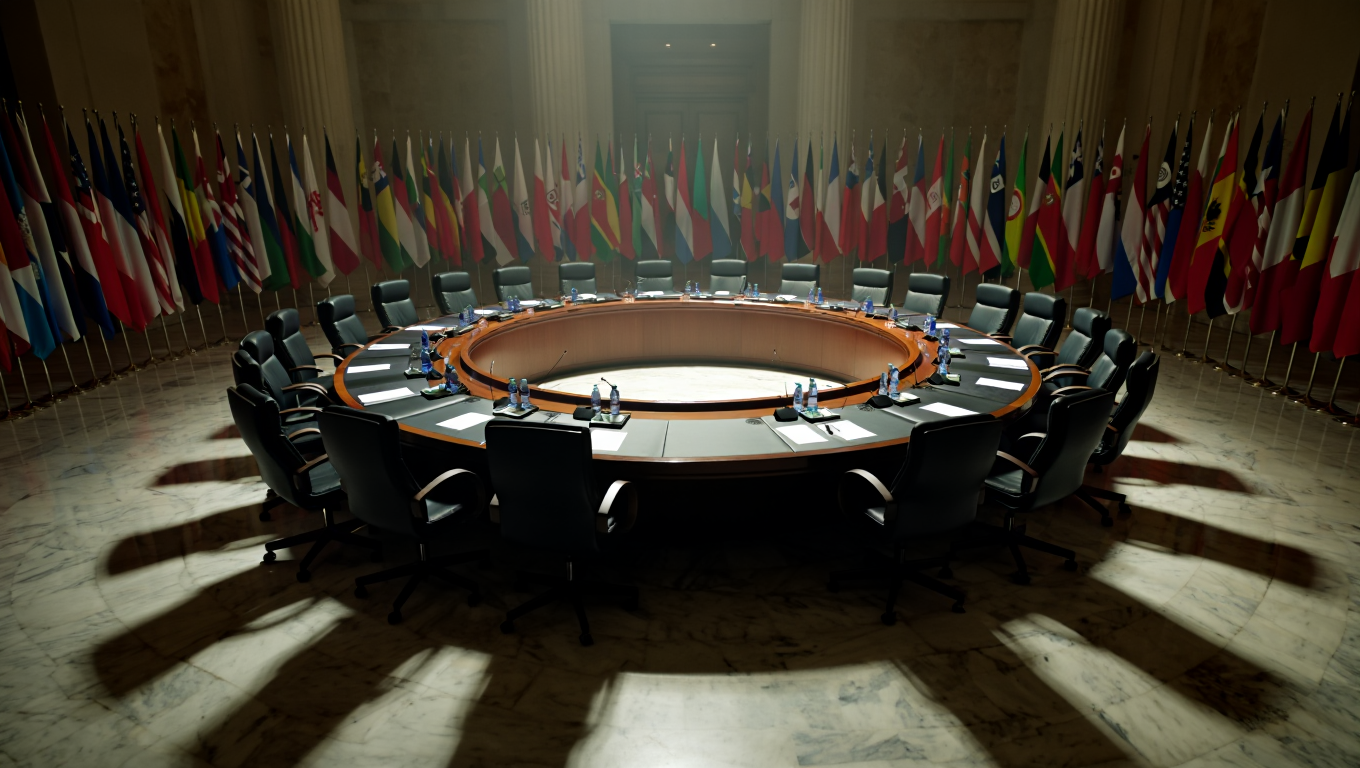
Before I get to my point, I should note that this is a pretty useful way to think about the Strait of Hormuz mess. Pretty much everyone understands that if time wasn’t an issue (or if ground troops weren’t a red line), America could break Iran’s stranglehold over Hormuz. But the world economy needs the stuff that goes through the strait—oil and gas, but also helium, petrochemicals, fertilizer, aluminum, etc.—on a tighter timeline. Like a seafood restaurant or newspaper vendor, countless industries can’t really afford to wait for the U.S. blockade to break Iran’s will. Our pain points are asymmetric. The Iranian regime is willing to endure a lot of kinetic whup-ass, but the constituencies Donald Trump cares about—Gulf countries; the oil, gas, bond, and stock markets; congressional Republicans; farmers; airlines; and some elements of MAGA, just to name a few—are either starting to freak out or are already fed up.
The Strait of Hormuz is kinda like the loading dock at the Fulton Fish Market, and the Islamic Revolutionary Guard Corps is Paulie Walnuts saying, “That’s a nice load of oysters on our truck. Be a shame if we got a flat tire on the Cross Bronx Expressway. Maybe you want to buy some extra insurance?”
California sclerosis.
The mob had effectively controlled the Fulton Fish Market since the 1920s, when Joseph “Socks” Lanza of the Genovese crime family took over Local 359 of the United Seafood Workers, Smoked Fish and Cannery Union in 1923. The feds managed to get a court-appointed monitor, but the mob held on. Indeed, that monitor, Frank Wohl, said in 1990 that the Fish Market remained a kind of “sovereign entity where the laws of economic power and physical force, not the laws of New York City, prevail.”
It wasn’t until Giuliani became mayor in 1994 that the mobs’ generations-long hold was really broken. I think Giuliani has become a tragic figure in the last decade, but he was an excellent mayor. No less than George Will said in 2007 that Giuliani’s tenure was “the most successful episode of conservative governance in the last 50 years.”
I don’t want to take anything away from Giuliani’s skills at the time, but one of the reasons he was so successful was simply that he wasn’t a Democrat. He wasn’t part of the machine that had controlled the city for so long. The coalition that he was answerable to wasn’t dependent on, or deferential to, the mob or to the quasi-mobbed-up pols, hacks, bureaucrats, and unions that had simply accepted that the status quo was natural. The fresh blood didn’t accept that “this is the way it’s always been.”
Which brings me to California in the 21st century, possibly the most pathetic episode of progressive governance in the last 50 years. California’s problems aren’t identical to New York City’s problems prior to Giuliani, but they are similar in important ways. The state Senate has been run by Democrats since 1975. The Assembly has been controlled by Democrats since 1996. Democrats have veto-proof majorities in both chambers. Arnold Schwarzenegger was the last Republican governor and the last Republican to hold statewide office in the state. He left office in 2011, but that date is misleading because during his second term, he basically capitulated to Democrats.
And California is a hot mess.
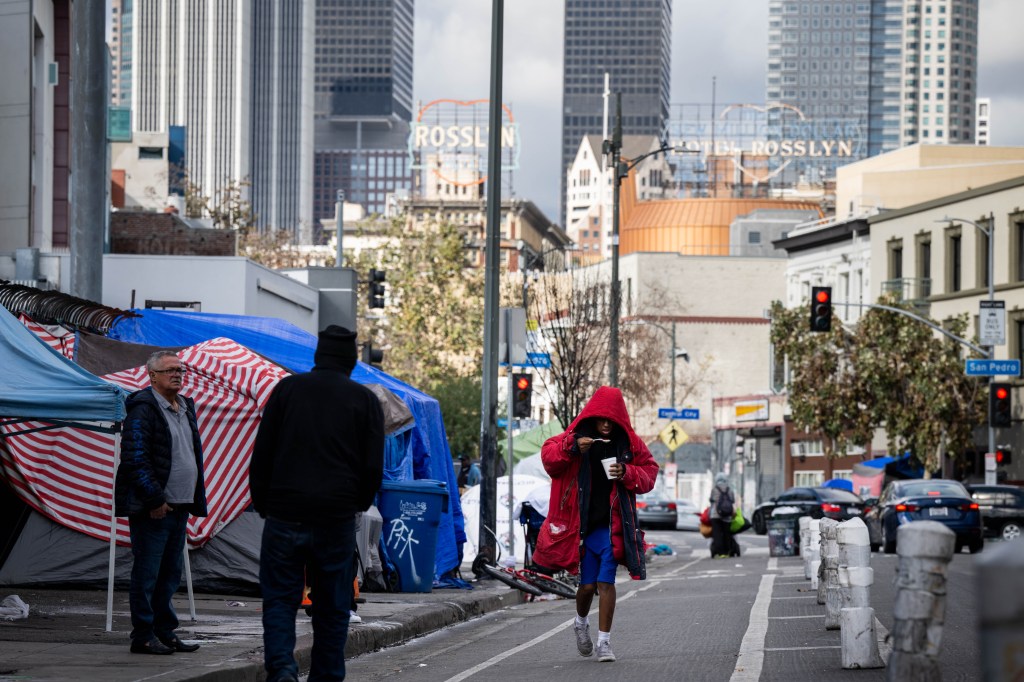
In 2019, Gov. Gavin Newsom announced a “Marshall Plan” to fight homelessness. Since then, the state has spent—I defecate you negatory—$37 billion on housing and homelessness-related policies. The result: a massive increase in homelessness—24 percent since the launch of the “Marshall Plan” (and a 60 percent increase since 2015)—with a 2024 estimate of 187,000 homeless people living in the state. I’m not a math guy, but that means California spent roughly $198,000 per homeless person.
And those are just the budgetary costs. Homelessness imposes other costs, and not just to the homeless. Businesses shutter because of homelessness. Neighborhoods suffer. People leave because of the damage to quality of life and perceptions of safety.
Obviously, homelessness involves a lack of housing, but the reason a lot of people are homeless has to do with mental illness and drug abuse. The reason a lot of non-mentally ill, non-drug-addicted people can’t afford a home is because housing is so frickin’ expensive in California. Only 15 percent of Californians can afford to buy a house at the median price. In 2012 56 percent of Californians could.
I was recently in Los Angeles, where gas was about $6.50 a gallon and diesel was nearly $8. Prices are high all over, but California consistently has fuel prices about a third higher than the national average. That was true before the Iran war, and it’s true now. Why? Well, a bunch of reasons. California requires a special blend for its gas that basically only California refineries make, and California hasn’t opened a new major refinery since 1969, while several have closed. California has crazy high gas and diesel taxes. California is basically not part of the U.S. gas market, both because of the special blend it requires and because there isn’t a single pipeline that crosses the Rockies. Can you imagine trying to get a permit for a pipeline into California? That’s why the state relies on maritime imports more than any other state, save for Hawaii, of course.
If California were a country, it would have the fourth biggest economy in the world. And yet on a cost-adjusted basis, it has one of the highest poverty rates in the U.S.
And don’t even get me started on California’s high-speed rail project, which is now projected to cost $126 billion. It was approved in 2008 for a cost of $33 billion, and as of now even the first phase won’t be operational until 2033. I’ll believe that when I see it.
I could go on for a while. But just consider this: No less than Nicholas Kristof recently pointed out that “a black kid in Mississippi is two-and-a-half times as likely to be proficient in math and reading by fourth grade as a black kid in California.”
The reason the legendarily bleeding-heart progressive journalist pointed that out? For the same reason I am: Democrats have had complete control of California for a very long time, and they’ve screwed things up royally.
Now, I am happy to argue that California is a mess because the progressives who control it have bad ideas. And in some cases, I think that’s definitely true. The soft-on-shoplifting nonsense in major California cities is so profoundly stupid it’s difficult to express my contempt adequately.
But another reason California is a mess has less to do with ideology than human nature. Democrats have been in power too long. The lack of competitive elections is a disaster for the state. It produces politicians like Newsom, Kamala Harris, Eric Swalwell, Katie Porter, Xavier Becerra, Dopey, and Sneezy. They know how to speak fluent progressive, but they don’t know how to govern outside their bubble. One reason Harris was such a bad presidential candidate is she never developed any muscle memory fighting the left. To get ahead in San Francisco and California politics meant pleasing, or at least placating, the left and demonizing the right. She couldn’t speak to normie, never mind center-right, voters because she never learned the language. That’s why she picked Tim Walz, because for a left-wing San Francisco Democrat, a white guy in flannel who knows which end of a rifle the bullet comes out of is a right-winger.
I think my cred as a Trump critic is pretty solid, but Trump is not responsible for California’s problems. Nor are Republicans or conservatives. These are all problems created by Democrats. As a gubernatorial candidate, Katie Porter claims she can tackle high gas prices and unaffordable housing because she drives a minivan and has a grown kid sleeping on her couch. When has she ever opposed any of the California policies that have led to high gas prices and unaffordable housing?
You don’t have to be a Marxist to understand that the political class, lacking meaningful competition, will become entrenched in the status quo and subservient to vested interests. Indeed, a Marxist would mess up the analysis by looking too hard at monied classes. But the rich don’t dominate California or define the politically possible. Unions, government workers, activists, and trial lawyers do. If the “billionaire class” ran California, the Service Employees International Union wouldn’t have gotten a wealth tax on the ballot for this November. If Hollywood moguls ran California, the film and television industry wouldn’t be bleeding out the way it is today. If Silicon Valley billionaires called the shots, why have Mark Zuckerberg (Meta founder and CEO), Larry Page and Sergey Brin (Google founders), and Peter Thiel (PayPal co-founder) fled the state? Why did Elon Musk move SpaceX’s headquarters to Texas?
Look, it takes two to tango. The California GOP has been a hot mess for a very long time. And in its rump-party condition it’s become crazier. I keep saying that I want the Democratic Party to become sane, because I’ve reached the conclusion that you can’t have just one sane party in a two-party system. California is a perfect example of the problem. The California GOP has become crazy because of its powerlessness, and the California Democratic Party has become corrupted by having too much power.
Simply throwing the Democrats out of power would do more for the state than enacting the top 10 progressive priorities. Whenever one party is in power for too long, dirt piles up in their blind spots. The dirt piles are so high, all it would take is someone with a modicum of will and seriousness to grab a broom and start sweeping. Simple fixes to zoning, labor, and environmental rules would have massive returns on investment. That’s what Rudy Giuliani proved in New York City.
Podcaster’s Note: Hey everybody, This is to let you know that we’ve made a momentous decision—for me, and perchance dozens of you. The Saturday Remnant—aka the Ruminant, aka that weird thing Jonah does—is going behind a paywall. I explain it all here. I hope folks who don’t subscribe to The Dispatchwill use this opportunity to make the leap.
Various & Sundry
Canine Update
This has been a very rough week for the girls. We now live, for at least the next few months, in a one-bedroom apartment (with a nice view), until our new place is ready or until I’m broke, whichever comes first. This is a hard time for us for a bunch of reasons. We had a wonderful home of 23 years. It was time for a change, but that doesn’t make it easy for anybody (especially my daughter). The dogs are trying to make the best of it, and they seem to like sharing a kennel with their humans. They’re coming to grips with elevators and a lobby with strange dogs and people. Zoë legitimately seems to enjoy the new smells, but the total overturning of security protocols has messed her up. It’s a bit of a walk to the nearest park, and she hasn’t been able to vet any of the dogs there. Pippa, on the other hand, doesn’t like being on a leash so much more (though given safe conditions we let her walk around unfettered). But she does seem to like meeting so many more pedestrians. And they’ve both been pretty great at tandem leash walking. This morning, however, Pippa was very upset by the fact that a blue jay attacked her at the Adams Morgan park. Weirdly, the same thing happened to Zoë a couple of days earlier on the street. For 12 years, they lived in a leafy corner of D.C. with daily trips to the woods. And they were never harassed by these thugs of the avian world. They also miss Kirsten, who can’t make the detour to our new domicile. But we’ve figured out a way to get them together a couple times a week (i.e., we have to rendezvous in a usable location). We left a massive care package for Chester, and some of the neighborhood kids are exploring how to take up our appeasement duties.
The Dispawtch
Member name: Merrie M. Soltis
Why I’m a Dispatch Member: I’m a huge fan of Jonah, Kevin, and David, and I’ve become an Advisory Opinions junkie. We need more conservative-leaning but reality-based journalism.
Pet’s Name: Marco
Pet’s Age: 15
Pet’s Breed: Himalayan
Gotcha Story: I finally convinced my husband to allow me to get another cat, so I hit the local cat show looking for a seal point Himalayan kitten. Finally found a breeder with two available. She combed the first kitten, handed him to me, and when I held him for the first time, HE LICKED MY FACE! I was a goner.
Pet’s Likes: Boxes. He is absolutely obsessed with boxes. I can’t even get my purchase out before he jumps in. He also loves his water fountain, nightly combies, and the treats he gets afterwards.
Pet’s Dislikes: Loud noises, sudden movements, and when his dinner is late.
Pet’s Proudest Moment: He once caught a bird that flew into the screened porch through a hole and proudly carried it into the house. We’re still not sure if the bird was alive when he caught it.
A Moment Someone (Wrongly) Accused Pet of Being Bad: He was found alone in a room with a broken lamp. The lamp had been on the table in front of the window in front of the bird feeder. There were no other suspects in the area, but he remained silent and was released due to lack of evidence.
ICYMI
- Cruises suck
- The budget is … not balanced
- Free markets. ’Nuff said
- Continuing to flex about going to an LA film festival
- Jonah and Charlie are in a situationship
- More librarian hate (we love to see it)
- Jonah in top form
Weird Links
- We don’t know … the other dog mighta swung first
- A Kiwi hero going out in style
- A new level of road rage
- Just go ahead and give these guys U.S. citizenship
- It’s a miracle he was caught …