
To truly fall for this country, hop in a car for a journey and strike up conversations with the people you meet along the way.
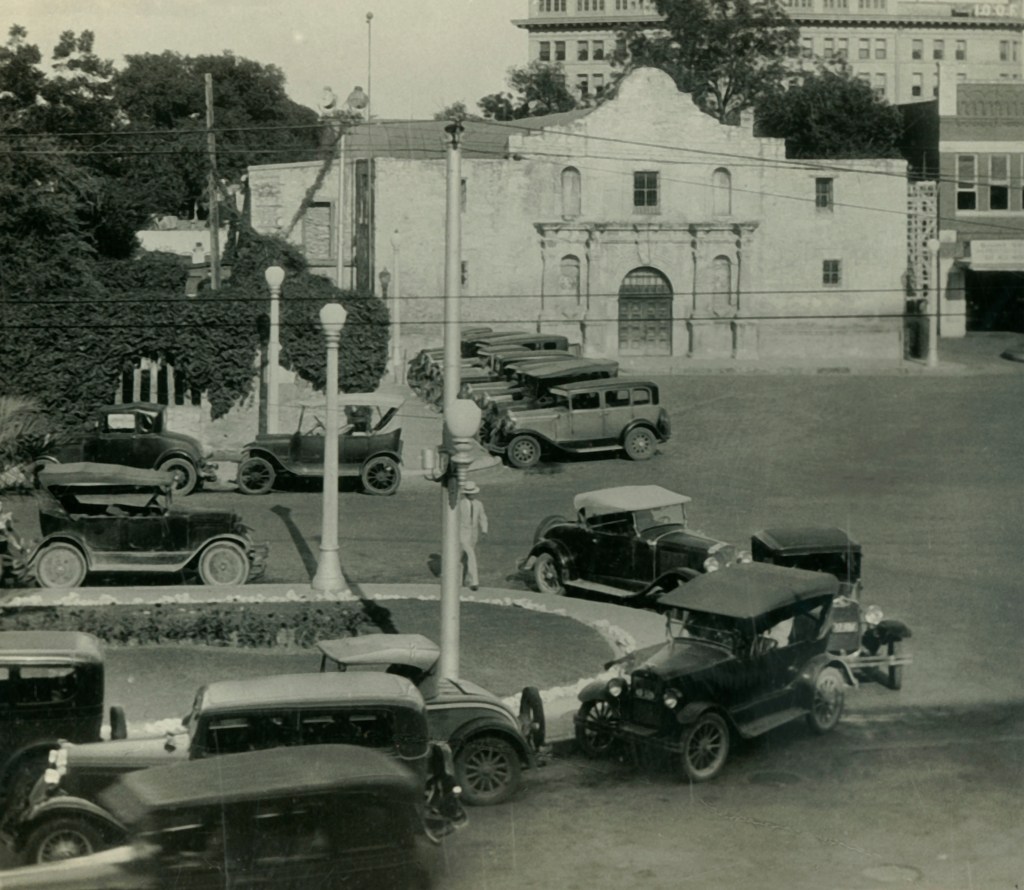
A few months ago, I loaded my homeschooled children into a road trip bound for a conference in Texas. The motive was clear: my 10-year-old history enthusiast has long wanted to see the Alamo. So, after finishing my duties in Waco, we drove three hours south to San Antonio and spent the day exploring the Alamo.
After arriving late morning on a blazing hot, sun-soaked day, we grabbed lunch at a humble Thai spot a couple of blocks from Davy Crockett’s final stand. I asked the owner—clearly an immigrant from Thailand—where he came from, and then how he found Texas. He fondly spoke of his homeland, then raved about Texas. It reminded him of home, he said—particularly the climate. When he first moved to America, he lived in Iowa, and the winters proved too harsh for him, he recalled. He’s much happier in Texas.
My kids, who adore snow, didn’t share his fondness for the heat, but we relished the journey. The Alamo impressed, as did the conference that preceded it. It was also a special treat to reconnect with several dear friends along the route from Ohio. It’s a joy to experience America at varying speeds—sometimes cruising at 70 miles per hour, at other times taking it slower at 35 miles per hour, and even sometimes strolling at 2 miles per hour, wandering through streets and stepping into buildings that predate the formation of the United States itself.
As an American tradition, road trips carry a noble lineage. We may be serious, buttoned-up people during our ever-lengthening workdays, yet we adore travel—seeing new places, tasting new foods, and staying in new surroundings.
A little over two centuries ago, when America was only 30 years old, rather than 250, the adventure-loving President Thomas Jefferson commissioned what we might call the first great American road trip: the Lewis and Clark expedition. In his forthcoming book, This Vast Enterprise: A New History of Lewis & Clark, gifted journalist and historian Craig Fehrman presents a fresh and gripping retelling of this mission, drawing extensively on original archival documents and other primary sources. “There is myth—Lewis and Clark as a timeless all-American epic, perfectly suited for family road trips and high school history, our astronauts in canoes,” he muses. Yet, as he notes, history can be stranger than myth. Still, at a fundamental level, a road trip remains a road trip.
From May 1804 to September 1806, the expedition moved from St. Louis to the American Northwest, Jefferson’s charge to locate a Northwest Passage to ease American commerce. Jefferson, ever the scientist and explorer, also asked the two leaders to document the geography of the land, record any unusual flora and fauna, and learn about the native peoples, inviting them to visit the president in hopes of forming alliances. A shrewd organizer, Jefferson also framed the mapping mission as an imperial project. The notion of “usucapio”—the idea that whoever uses something, whether land or an object, effectively claims ownership—goes back to Roman law: the user becomes the keeper. After a while, the user becomes the owner. In this case, whoever charts something first asserts a claim. Spain’s anger toward the expedition underscores that others were entertaining similar ambitions.
This much, most people remember from middle school history. But there is much more to the expedition’s tale, and Fehrman invites us to consider two central ideas:
The first is that, in the nineteenth century, life was defined by land… It’s easy to think of land as the obstacle Lewis and Clark had to overcome—the mountains, the rapids, the rain. But land was also their motivation, shared by everyone else. Their story was man versus nature, but it was also man versus man. This mix of people and motives leads to the second idea: The success of Lewis and Clark depended on more than Lewis and Clark.
With that second point in mind, Fehrman structures the book around the varying perspectives of ten individuals who participated in the expedition or whose lives it touched in meaningful ways. We hear from Thomas Jefferson (the figure without whom the expedition would never have taken place). Then there is York, Clark’s enslaved servant, who aided him before and during the journey, proving invaluable for his survival skills and medical know‑how. We also meet John Ordway, a New England soldier who enlisted in the expedition seeking better prospects at home. Lastly, there are the many Native Americans whose lives the expedition affected in myriad ways, some more tragic than others.
To take a road trip is to be confronted with beauty but also poverty, abundance and scarcity, joy and sorrow, past and present.
Perhaps the most famous of the latter is Sacagawea, the young Shoshone woman whose translation skills and other talents (for instance, sewing and clothing-making) proved essential for the expedition’s success. Exploring the expedition through her perspective was, for me, one of Fehrman’s book’s highlights. Kidnapped and enslaved by an elderly white entrepreneur, Sacajawea was only in her mid-teens when she joined the expedition. She was pregnant and gave birth to a baby boy during the journey—and the birth was extraordinarily painful.
Stories like Sacagawea’s and York’s bring the expedition into sharper focus, reminding us that alongside the beauty of this extraordinary journey that accomplished much (though not everything Jefferson hoped for), there was substantial suffering as well. But that is the story of America—and not only in the past. Do we recognize these neighbors of ours—neighbors in both historical and moral terms—in our history or on our road trips today? To undertake a road trip is to face beauty but also poverty, abundance and scarcity, joy and sorrow, past and present. All of this is America.
At one point during our Alamo visit, my son leaned against a wall inside the Long Barrack, a former part of the mission. A docent immediately asked him not to lean on the oldest wall on site, built in the 1720s. The wall’s texture, worn smooth in places, testified to many similar moments by visitors over the centuries. As we explore historic sites, we inevitably leave traces of ourselves behind—those shoulder rubs that gradually smooth out walls, just as the countless footsteps carve grooves in stone stairs and paths.
Not long after we returned home to Ohio, someone asked the kids what their favorite part of this 10-day, 2,800-mile road trip had been. “Eating at Waffle House,” my seven-year-old daughter answered immediately, without hesitation. I suppose that, too, is a vital component of any great American road trip—at least in regions fortunate enough to have a Waffle House. But it also reminded me how swiftly the tragic and the ordinary collide and mingle in such journeys. From the Alamo’s tragic final stand to the crispy waffles and grease-soaked hash browns, a short drive separates them. Such is the fabric of life, whether for individuals or nations as a whole.
Fehrman agrees. In a note to readers, he reflects on the ten voices around which his book is built: “I love each of these ten people, even if some of them break my heart.” Reading his book—especially learning what happened to some of them after the expedition—one can’t help but agree. Yet, it’s true that only the things we deeply cherish can break our hearts—our love for our country and its traditions, the beauty and the pain, glory and shame, forever entwined.