
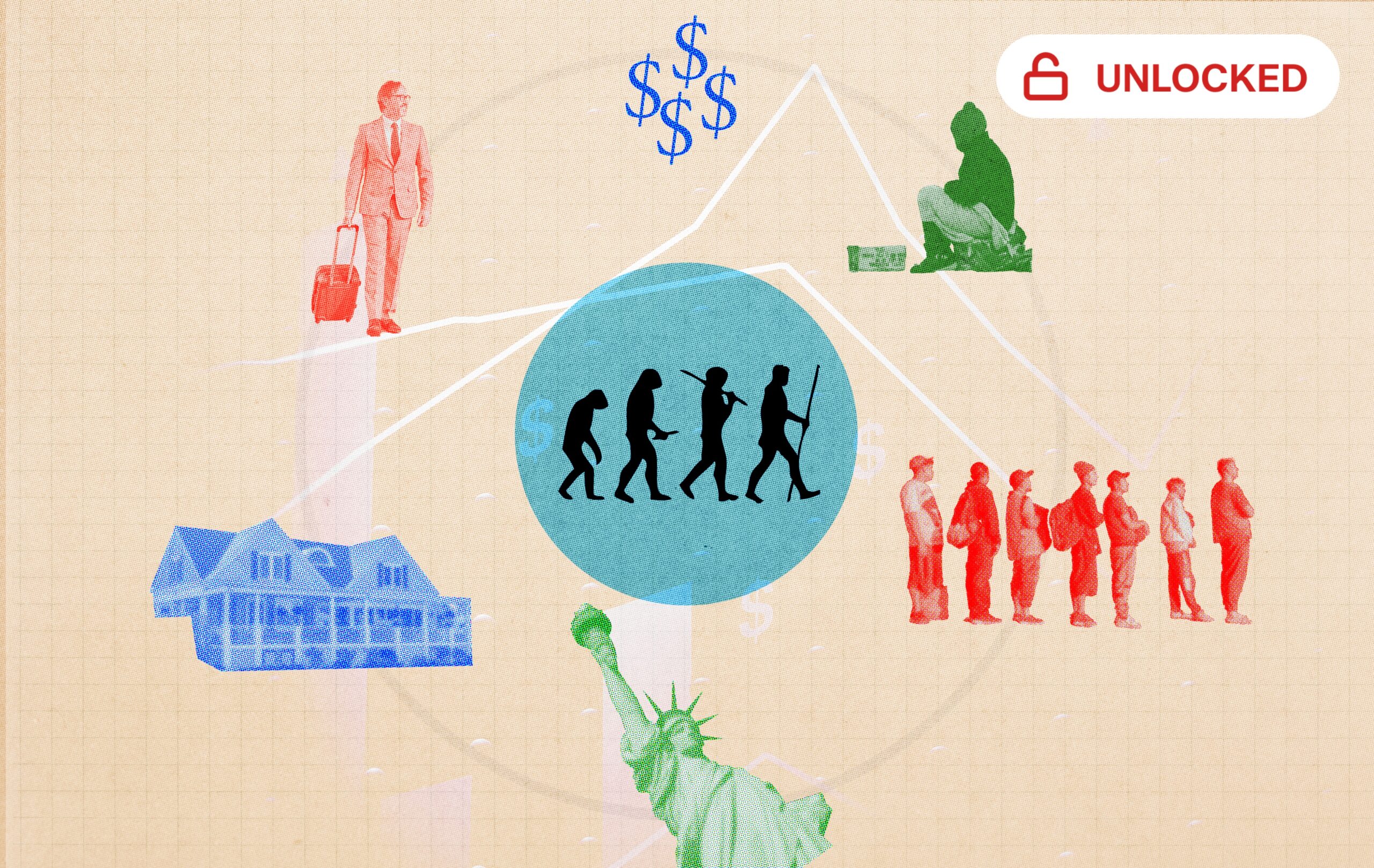
Economic models, built on the premise that individuals act rationally to maximize satisfaction within limits, have for generations offered clean, elegant templates for predicting how people behave in markets and communities. Yet a stubborn gap remains between these stylized depictions and the actual ways people make economic decisions. Voters and policymakers often push for policies that contradict core economic insights—policies such as raising the minimum wage with the belief it raises living standards without sparking job losses, rent ceilings designed to lower housing costs without shrinking supply, or tariffs that undermine comparative advantage and consumer affordability.
Many individuals cling to misleading instincts as well, such as the notion that markets undermine social ties, even though markets often promote cooperation and enlarge prosperity. These tendencies arise less from ignorance or faulty reasoning and more from the brain’s evolutionary wiring. Our economic gut feelings were forged across millennia within close-knit groups and pervasive intergroup zero-sum contest, making contemporary market mechanisms feel contradictory. Consequently, markets are frequently dismissed even when they would serve us well.
One of the simplest, most economical explanations for why people repeatedly act against their own economic interests is the evolutionary account of folk-economic beliefs developed by anthropologist Pascal Boyer and political scientist Michael Bang Petersen. Folk-economic beliefs are the kinds of economics-related convictions held by non-experts that often diverge from core economic reasoning. They cover mental models about a spectrum of topics—from prices, taxes, and trade barriers to welfare, immigration, and other public policies.
Economists have long labeled these beliefs as irrational or mere ignorance, but viewing them through an evolutionary lens shows them as predictable products of our past. Our forebears faced problems of fair exchange, social bonding, coalition formation, and property disputes, and folk ideas emerged precisely as strategies to cope with those challenges.
And if this account is correct, both real-world economic conduct and the theories that explain it are fashioning themselves as evolutionary outcomes. When folk-economic beliefs misfire, they do so in consistent, predictable patterns: we portray abstract markets as if they were kin-based conflicts; we treat thriving, surplus-based economies as though they were battles over a finite, shared stock of goods.
Take the common belief that international commerce hurts us because every gain by another nation exacts a cost from our own. In standard economics, this clashes with the principle of comparative advantage: people and countries prosper by specializing in what they do best relative to other goods, even if the partner could produce everything more cheaply. For instance, a surgeon who types faster than a secretary still benefits by employing the secretary and dedicating more time to surgery. Similarly, the U.S. could make its own electronics, but devoting resources to assembly prevents investing in software, chips, and financial services where U.S. firms have edge. The outcome is higher total output and mutual gain.
Nevertheless, our evolved psychology is not equipped to navigate cross-border division of labor in the way economic theory does. Historically, groups competed over territory, food, and status in genuinely zero-sum fashions, so the rise of a rival power often signaled danger. When modern readers hear that another country exports more or runs a trade surplus, their tribal instincts flip on automatically. Nations get coded as tribes, and one tribe’s success is seen as a threat to the other. The idea that both sides could gain simultaneously—central to Adam Smith’s insight—conflicts with these deep-seated intuitions.
The same coalition logic helps explain folk suspicions about immigration. Opponents often claim immigrants snatch jobs from natives while also drawing welfare benefits without contributing. On the level of policy argument this seems contradictory; but psychologically it’s a single worry: outsiders are consuming scarce resources, whether the resource is work opportunities or benefits. Humans evolved in groups where belonging granted access to shared resources—food, protection, status—and where vigilance against free riders was essential to preserving cooperation. Newcomers were therefore met with suspicion until they proved themselves as contributors rather than exploiters.
Transposed onto contemporary societies, this heuristic leads to the sense that outsiders are consuming resources that rightly belong to the in-group. The concrete resource—jobs, welfare, or even the belief that resources are being depleted—matters less than the perceived crossing of group boundaries without reciprocation.
The psychology of spotting free riders also sheds light on the mixed feelings many harbor toward welfare. People readily agree that society should assist those facing misfortune through no fault of their own, yet they worry that welfare promotes laziness or dependency. These views only seem inconsistent if one assumes a single economic theory; in reality they reflect two distinct inherited instincts from ancestral exchange systems.
From this perspective, communal sharing emerged as a form of social insurance against bad luck—injury, sickness, or a failed hunt—benefiting everyone in the long run. Yet the same mental systems evolved to punish those who benefited without contributing. Contemporary welfare debates thus trigger both impulses simultaneously: compassion for the unfortunate and suspicion of perceived free riders.
Another widespread folk belief centers on the link between labor input and value. Many people instinctively equate hard work with the worth of a thing. In the hunter-gatherer era, where the effort required to obtain goods was visibly tied to their value, intense exertion naturally signaled productive contribution. But in modern economies, a coder, a supply-chain organizer, or a capital allocator can create substantial value without performing noticeable physical labor. Yet, because our ownership psychology is sensitive to effort and transformation, profits generated by organization or innovation often feel morally suspect, especially within certain socialist critiques, as if they represent extraction rather than creation.
Much of the resistance to rewarding profit can be read through an evolutionary lens. In face-to-face exchanges within intimate groups, unusually large gains might signal exploitation or hoarding of scarce resources, particularly since producing valuable things usually required communal effort. A person who consistently benefits more than others from trade could be suspected of manipulating information or violating fairness norms. Yet modern markets frequently reward individuals for breakthroughs in technology, logistics, or network coordination, often benefiting strangers rather than known partners. In those impersonal contexts, profits can look less like innovation rewards and more like exploitation, and our evolved moral intuitions struggle to track value creation across dispersed, opaque markets.
Similarly, many common beliefs about regulation echo the conviction that authorities can directly steer results. When a chief of the tribe decreed a sharing rule for food, enforcement could rely on social pressure or immediate supervision. Everyone knew others, contributions were visible, and deviations could be punished on the spot. This experience makes it feel plausible that governments—our minds perceive them as tribal coalitions—could simply command outcomes in the economy. If rents are soaring, they can be capped; if wages are too low, they can be raised. In naive folk-economy theories, prices resemble promises: a top-down price decree should yield the anticipated result.
Take rent control as an illustration. The core intuition—renters facing unaffordable increases is unfair when a landlord profits from scarce space—appears simple and morally compelling. A government rule that caps rents seems like a straightforward justice mechanism, restoring affordability. But in a complex market economy, rent levels serve as signals guiding investment and construction in housing. When rents are constrained below market, investment signals weaken; developers build fewer units, landlords repurpose rental stock, and maintenance declines as returns shrink. Over time, the housing stock contracts, worsening shortages and intensifying the very scarcity the policy aimed to fix. The flaw lies in the fact that the underlying market adjustment mechanism remains invisible to the intuitive model that generated the sense of fairness.
Similar dynamics appear in debates over minimum wages. Although paying very little for hard work feels unfair, wages in a modern labor market also function as signals that direct hiring across the economy. If the legal wage floor exceeds the productivity level of certain jobs, employers will slow hiring, substitute machines for workers, or rearrange tasks so that fewer employees are required. When the price signal shifts, behavior changes in ways the regulation did not foresee, often achieving the opposite of the intended effect.
Our cognitive toolkit is not that of a perfect calculator; it comprises specialized inferences, or intuitions, that solved recurrent problems in ancestral settings—questions like “Who can we trust for exchange?”; “Who belongs to us, and who is a rival?”; “Who contributes, and who free-rides?”; “Who owns what, and by what right?” These instincts can be activated by contemporary economic scenarios that resemble ancestral ones, even when the present circumstances are entirely novel.
Folk-economic beliefs endure not out of irrationality but because they use reasoning tools evolved to help cooperation in small bands rather than coordination among millions of strangers. The challenge for modern societies is thus not merely to correct mistaken beliefs but to craft policies that cooperate with—rather than conflict with—human psychology.
Today’s market-based societies stand among humanity’s most remarkable cultural achievements. They emerged by leveraging a disparate set of ancient social impulses that permit cooperation on a scale never seen before. Property rights, contract enforcement, and voluntary exchange let countless strangers align their efforts for mutual gain.
The point is not that markets are flawless; it is that our evolved intuitions frequently misidentify the core problem, steering us toward remedies that worsen matters. In contemporary economies, losses that are visible tend to be concentrated, immediate, and emotionally salient, while gains are diffuse, gradual, and spread across millions of workers and consumers. A serious defense of markets should acknowledge adjustment costs and real harms while rejecting the larger error: treating mutual gains, price signals, profits, and exchange as forms of exploitation.
Some inherited instincts—valuing reciprocity, rewarding contribution, building trustworthiness—remain essential to flourishing societies. Markets themselves rely on these deeply rooted norms of cooperation and exchange. Other intuitions—zero-sum views of trade, wariness of profitable innovation, or the belief that authorities can simply dictate prices—are cognitive shortcuts suited to scarcity and small-group control, not to a world of decentralized abundance.
Recognizing this distinction should not lead to a wholesale dismissal of legitimate concerns. Not every market outcome is benign, and not every economic anxiety is illusory. Global trade, rapid technological progress, and shifts from manufacturing to services can impose real, concentrated losses on certain workers, firms, and regions—especially among low-skill labor markets exposed to offshoring or displacement by new modes of production. When someone loses a job to foreign competition, it’s not simply due to faulty intuition but a genuine setback; the same holds in downturns or cases involving fraud and externalities.
The question, then, is how societies can address those real costs without defaulting to the very intuitions that misdiagnose their causes.
Humans stand out among species in our capacity to revise gut judgments via abstract reasoning and accumulated knowledge. Economic theory, empirical studies, and policy experimentation provide ways to test whether our intuitions about markets align with the systems we inhabit. Over time, societies that learn to discriminate between intuitions that foster cooperation and those that distort economic signals tend to design more effective institutions.
Much of the modern progress owes to this process of institutional learning. Expanding trade, defending property rights, spurring innovation, and letting price signals coordinate decentralized choices have yielded levels of prosperity once unimaginable in the environments that formed our economic heuristics. Understanding the evolutionary roots of folk-economic beliefs helps explain why certain policy ideas persist despite poor outcomes—and why sustained progress depends on institutions that counteract our strongest intuitions while reinforcing those that support cooperation, openness, and exchange.