
By nearly every measure, Norway stands as a remarkably successful nation. It enjoys wealth, a functioning democracy, and relatively low levels of corruption. It isn’t a socialist state, but supporters of a robust welfare system and steep taxes find much to admire in Norway’s thoroughly progressive model. It also benefits from possessing the largest and arguably best-managed sovereign wealth fund in the world.
And yet, Norway nearly ruined its own children.
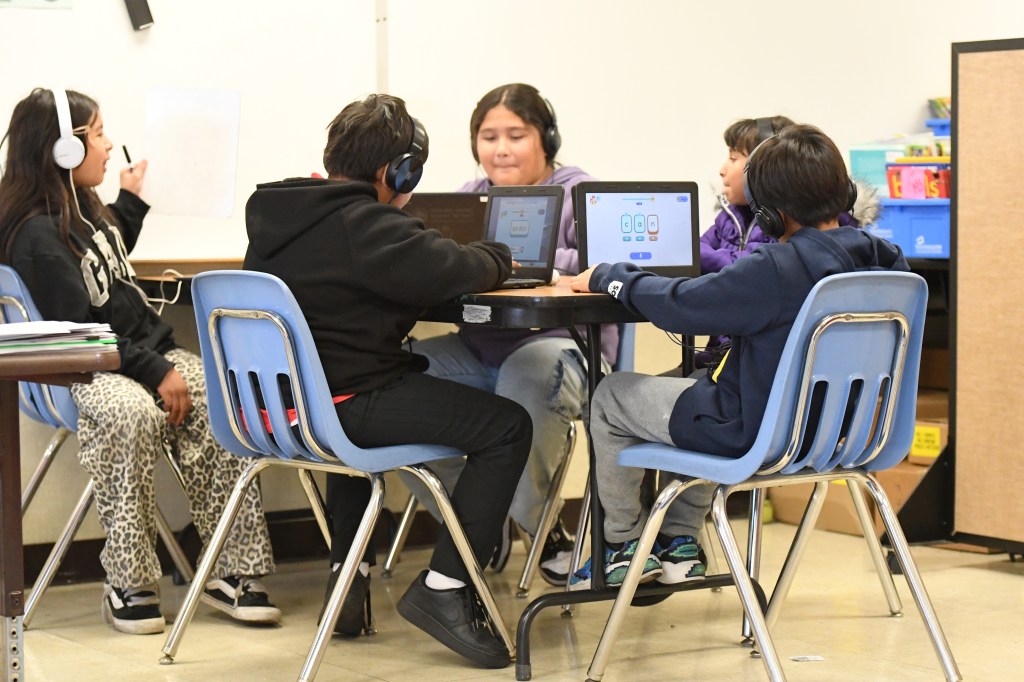
In 2016, flush with money and progressive ideals, Norway distributed to every child in the country—a starting at age five—an individual iPad or a comparable digital device. A decade later, the next generation of Norwegians is finding reading increasingly difficult. “Around 500,000 Norwegians, in a population of only 5.6 million, cannot read a text message or simple instructions,” reports the Times of London. “Of the 65 countries measured for children’s enjoyment of reading by Pirls (Progress in International Reading Literacy Study), it comes bottom.”
Prime Minister Jonas Gahr Store unveiled a program in August to address the problem. “Norwegian children used to be among the best readers in the world,” he said at the time. “But today, 15,000 pupils finish primary school without being able to read properly.”
Now imagine equipping every child with an AI chatbot to answer all of their questions.
I am not a doomsayer when it comes to artificial intelligence. But, given Norway’s experience with iPads—or our own with smartphones—I worry that the broad adoption of AI, especially in schools, could prove very harmful to children.
As a curmudgeon and as a writer, I loathe nearly every cliché about children, even the ones that are true. With that caveat, the simple fact remains that children are the future. They will become the next generation of parents, voters, and citizens. And all of the clichés about how kids learn by doing hold true.
AI removes the doing.
Just as you can’t learn how to ride a bike by reading a book, you can’t gain the benefits of reading by asking AI to read a book for you. The same is true for mathematics, science, computer programming, and nearly every other facet of education.
Our military is the finest and most lethal in the world. But before you learn how to operate a drone or launch a cyberattack, you still must complete basic training.
Education, both at home and in school, is basic training for civilization.
Americans love technology, but not every technological advance is an improvement in every sphere of life. There are machines that can lift weights, but letting a machine lift for you doesn’t count as exercise and doesn’t build your muscles. Relying on a machine to think for you risks mental flabbiness.
Fans of AI dislike this argument. They invoke phrases like “cognitive shift” and “upskilling.” By erasing the drudge work, intelligent systems can enable smart people to be smarter and more productive. There is merit to this when applied to those who already possess high skill levels. But how did those workers become highly skilled in the first place? By doing the work.
Educators learned a similar lesson when cheap calculators became widespread in the 1970s. As problems grew more complex, calculators could help, but you first needed to master the basics. You also needed to learn to think mathematically. AI is essentially a more powerful calculator for nearly all mental tasks. Again, that’s often—but not always—beneficial for adults who grew up in a world before AI.
That’s why I believe education should largely stay in the pre-AI realm. That will be difficult. It will require more memorization, more in-class testing, and an educational establishment capable of resisting the lure of technological fads. If the aim of education is to build muscle memory for how to think and how to do things, letting kids go home and have AI provide the answers is not very different, educationally, from letting them cheat. For the same reason that a robot doing 50 pushups wouldn’t pass a physical-fitness test, having a robot read a book for you shouldn’t be acceptable either.
The point of education in the AI era should not be to teach children how to locate the answers as efficiently as possible, but to equip them to pose the right kinds of questions, including the ability to ask an AI chatbot why it produced the answers it did.